
What do Palestinians think about the claims of Israeli protesters to be defending “democracy” from Netanyahu’s reforms? Miriam Scharf reflects on a movement which challenges the right-wing coalition government, but still defends the racist institutions at the heart of the apartheid system and talks to Palestinian activists Eid Suleiman, Mohamed Tamimi, Tariq Hathaleen and Habeeb Makhoul about their perspectives.
This is an article from the current issue of Middle East Solidarity magazine. Download the full issue here, or order your print copy from Bookmarks Bookshop.
Hundreds of thousands of protesters have filled the streets of Israeli cities this year. For over 33 weeks,up to 240,000 have demonstrated in Tel Aviv, and thousands weekly or fortnightly elsewhere. Amidst a sea of blue and white flags, they say they are fighting for democracy by blocking roads and threatening not to turn up for military service. They are concerned about what control of the government by messianic religious parties means for secular Israelis.
Yet it is the apartheid nature of the Israeli state and society which lies at the heart of the current government’s attacks on the powers of the Supreme Court. The court is seen as an obstacle to enabling the faster annexation of the West Bank and faster Judaization of areas inside the ‘Green Line’, the areas of historic Palestine seized to create the Israeli state in 1948. Bezalel Smotrich. leader of the Religious Zionist Party and Itamar Ben-Gvir, leader of the Jewish Power party, both now ministers in Netanyahu’s government, are clear they want to remove legal obstacles in order to complete the expulsion of Palestinians from the whole of historic Palestine. Smotrich’s ‘Decisive Plan’ released in 2017, gave Palestinians the option of living as second class citizens in an Apartheid State from the river to to the sea, leaving, or being killed if they resist, is now being enacted. However the protesters are not challenging the government on these questions. Physicist Dr Shikma Bresser was featured in the New York Times as the face of Israel’s protests, expressing concern to build a ‘new, stronger, better democracy for the good of all the people’.
Hours after Israeli troops committed an atrocity in Jenin this June which left 12 dead and over 100 injured, Bresser said the fight for democracy was so that “our heroic children, brothers and partners who are now fighting in Jenin will not be exposed to prosecution at the Hague.” The Supreme Court has served to protect soldiers who commit war crimes which is why so many army personnel have been at the forefront of the opposition. Clearly for Bresser “all the people” did not include Palestinians.
So how do Palestinians view these protests for “democracy”? ‘48 Palestinians, who were forced into a choice between accepting Israeli citizenship or leaving for exile during the ethnic cleansing which marked the birth of the Israeli state, live with over 57 discriminatory laws. These include the Nation-State Law which officially makes non-Jews second class citizens. Those under occupation in the West Bank since 1967 are terrorised daily by the police, the army and increasingly by Zionist settlers. They suffer arbitrary arrest, imprisonment, torture, and death. Meanwhile, the siege on Gaza continues, punishing families of those who fled from Israeli forces in 1948 and remain in refugee camps to this day.
Some Palestinians express the hope that the protests could change this. The Israeli newspaper Ha’aretz asked Ayman Odeh, leader of the left-wing Arab and Jewish party Hadash for his response to the fact that settlers are regularly bussed in from the West Bank to join pro-government protests. He said: “Imagine if the people who are against this judicial review had brought buses from the West Bank … but also from East Jerusalem and Gaza as well, and created a movement with Israeli and Palestinian flags that was a movement for equality and against the very notion of ethno-nationalism.” But the reality so far is that anti-occupation groups who join protests with slogans such as “no democracy with occupation” and “democracy for all, from the river to the sea” are very small and on occasions have been attacked by protesters. Palestinians point out they have not been invited to the protests on their own terms, only on the terms that define democracy as rights for Jews. Reem Hazzan, secretary of the Haifa District Communist Party was invited to speak at the protest in Haifa. The text of her speech included, “We will be partners in the struggle when the goal will be to change the policies of racism and discrimination and establish a new social contract based on the pursuit of peace and equality when the fight for democracy will aim for real democracy: not democracy only for the Jews, but democracy for everyone.” It was rejected by the protest organisers.
Palestinians have lived for decades with Israelis normalising violence against them. For secular Zionists they are a threat to the Jewish State, while for religious Zionists Palestinians should not even exist. The crisis of the Zionist state is the logical result of the continuity of the Nakba and the continuity of Palestinian resistance. The increased support for the religious right is partly because Labour Zionism, which formed every government from 1948 until 1977, hadn’t quelled the Palestinian resistance.
Smotrich declares himself to be a fascist. This has significant implications for support for Israel in the US and Europe and opens up potential to build support for Palestine. Activists in the West have an important role in weakening the support for Israel as Zionism comes to its logical and frightening endgame.
As the religious right continues its attacks, with the government backing increasing settler rights and violence, Palestinians are being forced into a fiercer fightback. The “Unity Intifada” of May 2021 was a major step forward in asserting Palestinian identity and rights. Building on that experience will be crucial to give hope to the movement for Palestine everywhere.
‘They are clearing the area of any trace of Palestinians’
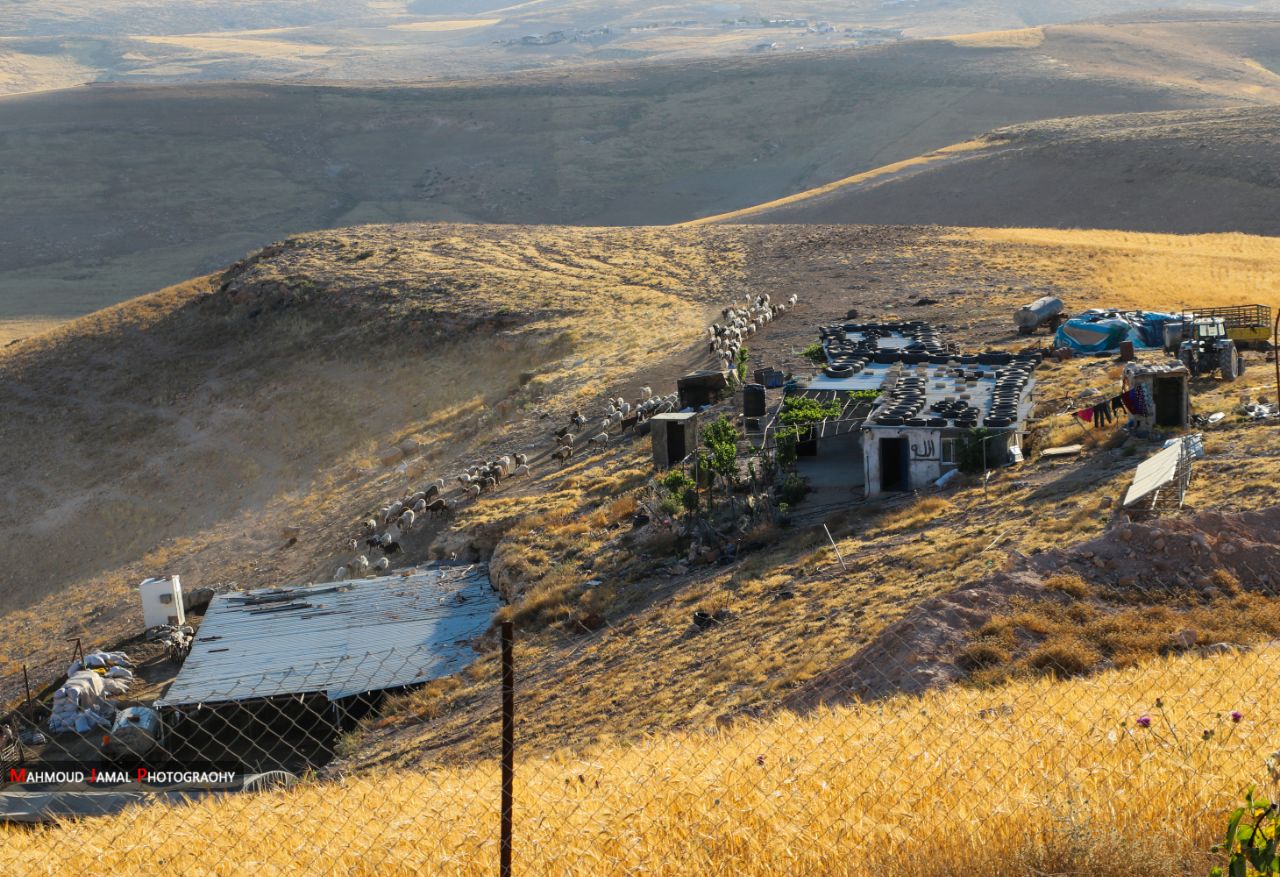
Under the current Israeli government Palestinians face accelerating threats. Eid Suleiman lives with his family in the Bedouin village of Umm Al Khair adjoining the Masafer Yatta area of the South Hebron Hills. Last year the Supreme Court designated this area comprising 8 villages ‘a fire zone’ leading to thousands being forcibly displaced.
Everyone lives in fear of the Israeli authorities and the settlers. Settler barns are allowed to be erected while Palestinian shepherds are not allowed to graze their animals where they have done up until now. The animals are forced to be in their pens for much longer periods than they should be. Cars, both insured and illegal, are being confiscated to prevent movement to school and to the city for essential reasons. They are taking everything away after demolishing homes and schools. It is as if nobody was there in the first place. They are clearing the area of any trace of Palestinians. You can’t plan any future. It prevents you from moving forward.”
‘Palestinians do not kid themselves they will get any legitimacy from the Supreme Court’
Mohamed Tamimi is a Palestinian activist working with Hebron International Resources Network (HIRN) which works on the ground on the frontline against dispossessions. In an interview with a US radio station Mohamed described how Palestinians in the West Bank are reacting to the protests.
Palestinians here do not kid themselves that they will get any legitimacy from the Supreme Court. Going to the courts is always a matter of playing for time. They do not hope for justice from the court, it is a tool of the Israeli occupation. The people of Masafer Yatta and the Palestinian in the street could not care less about what happens there. They do not see any impact or any assurances that he can stay on his land, feed his animals and feed his family. But people who are really looking into this question in depth with analysis and background, we are very interested in what is happening in the Israeli streets. We are looking if this is going to be a victory for the Israeli right.
If that happens we are basically doomed. But if there is going to be any pushback by the Israeli left and centre there might be a way where we can inject into it the issue of the Palestinians. What about their rights? Israelis are realising this is touching the very heart of what we are about. So the hope is that that will open up and let Israelis in the state of Israel have a look inside at what it is that we are doing, why did we get to this place. Why are we having so many ideological clashes and what is this all about? This ongoing discussion will hopefully revise the issue of what is Israel? Who is it for?
And these questions start to come out, especially for Jews outside Israel. So this ongoing discussion will hopefully revise the issue of what is Israel? Who is it for? This is a defining moment for them. And the hope is that they will say, no, we are a liberal democracy. We are supposed to be embracing everybody, embracing all of the differences between us. Then if things go in that line then there’s the possibility the question will come up: ‘what about the Palestinians?’ If we end up going the other way to theocracy, that this is actually a religious state specifically for the Jews, and they are better than the Arabs living in the West Bank or in ’48, then this is where extremism will continue. And this is where the international community will have to come face-to-face with the question of what kind of state Israel actually is.
Is it acceptable in the 21st century that they are saying they’re better than other people basing everything on their own religion? We need political will in the international community to say to the Israelis this is not acceptable and that goes along with your decisions and your dealing with the Palestinians.”

‘These demonstrations reveal the true face of those who rule the nation’
Tariq Hathaleen is a young schoolteacher who lives in Umm al Khair.
As a Palestinian, observing the recent demonstrations in Israel has been a challenging experience. While some view these protests as a step towards addressing the Israeli occupation of Palestine, I can’t help but feel that they often fall short of truly acknowledging the harsh realities we endure daily. The primary motivation behind these demonstrations seems to be the desire of some Israelis to dismantle what they see as an extremist government and protect what they label as their democracy.
However, as this government erodes the integrity of their own courts and legal institutions, it’s clear that their aims are not primarily focused on the plight of Palestinians. This harsh reality is difficult to ignore.
Nevertheless, there is a silver lining to these protests, albeit a subtle one. They do shed light on the mentality of settlers and the individuals who wield power in Israel. These demonstrations reveal the true face of those who rule the nation and their approach to the Palestinian issue, serving as a stark reminder of the underlying complexities and challenges that have hindered any meaningful progress towards ending the occupation.
I also want to acknowledge the presence of a small group of Israeli demonstrators who genuinely stand in solidarity with the Palestinian cause. They seek genuine peace, full protection, and rights for Palestinians. However, their numbers remain limited, highlighting the uphill battle faced by those striving for a just resolution of the occupation. In conclusion, while the recent Israeli demonstrations may not provide a direct path to addressing the Israeli occupation or achieving Palestinian freedom, they do offer some insight into the mindset of those in power and the enduring struggles. It is my hope that, in time, the world will come to realise the reality and see the truth before it’s too late.”
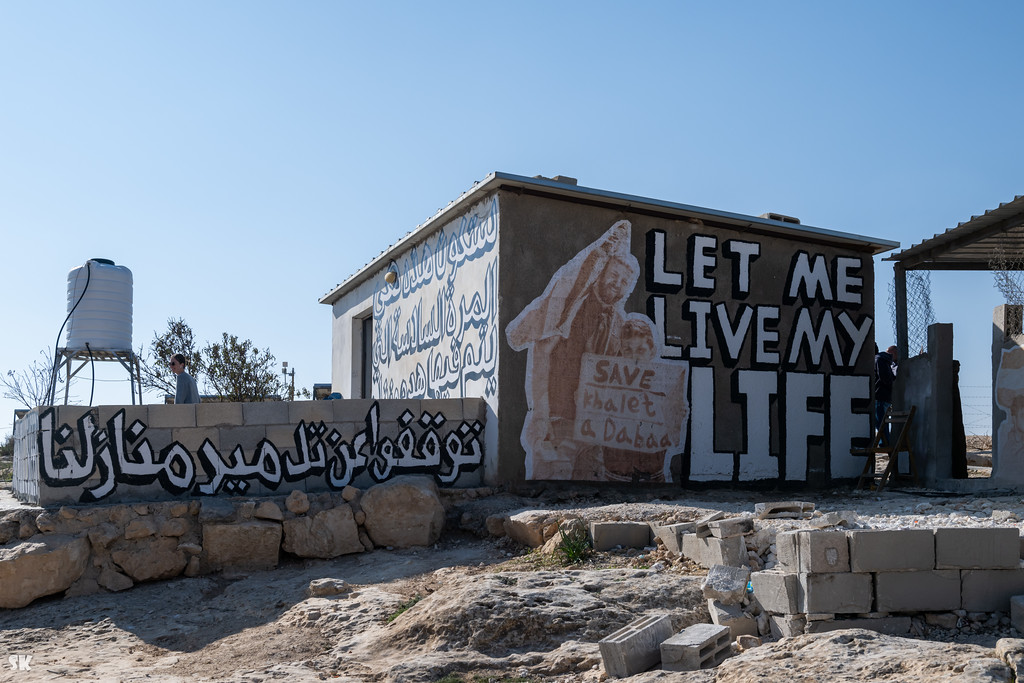
‘This is an intra-Zionist argument’
Habeeb Makhoul is a student of public policy at the University of York
We ’48 Palestinians, we speak Hebrew as well, we see the news, we see both worlds. Palestinians have so many problems to care about: crime, poverty, unemployment, death, settlements, education, legal family separation, immigration, why should we care about the Supreme Court? They say the court protected some rights of minorities in Israel. But this is very little. For example there’s a 20 percent Arab minority and 80 percent of them live in Arab municipalities. Twenty percent of Arab municipalities are governed by a commission, which is appointed by the interior minister. These municipalities are impoverished, so the government claims that they are unable to govern themselves, they can only be run by a commission, damaging democracy at the local level.
The Arabs are a very poor and discriminated against group and this all happened under the Supreme Court. Take collective punishment. They accuse a Palestinian of terrorism, they kill him, they demolish his house and his family is made homeless. The Supreme Court approves this collective punishment, which is against international law. Twenty-six percent of the West Bank today is authorised as training zones for the military, in other words no private property is allowed there. The Supreme Court approved this. The Supreme Court approved the racist separation wall which took more land from the Palestinians than what was agreed through Oslo ‘peace process.’
A lot of ’48 Palestinians have citizenship, they have the blue ID card. but when 220 Palestinians have been killed in one year you can’t convince yourself things are okay. The majority of my generation do not identify as Israeli. We’ve always been second-class. People have realised what the Oslo ‘peace process’ was, and that the two state solution was a lie. The Supreme Court contributes to the illusion of democracy when really this is ethnic supremacy of a religious group. The problem for the Israelis protesting is they hate the fact that this is finally starting to show up. It’s destroying their ideal. As ’48 Palestinians there are many other more urgent issues that require our civil disobedience, though we are not doing it.
The reasons are partly the level of repression we faced in 2021 when we came onto the streets in the Unity intifada. In May 2021 the methodical violence was so frightening. I was in the Ben Gurion district of Haifa. The issues were Sheikh Jarrah evictions, Gaza, and the Al Aqsa mosque. There were maybe a hundred of us, chanting, and with a few flags. We were moving along the street, all the businesses and shops were closed. And then they attacked. The response was militaristic. The place was filled with riot police. You had to cover your ears from the stun grenades. People were screaming, there was a stampede to get away from the water cannon and endless stun grenades. I had one blow up in my face. Afterwards you could see the whole street was full of stun grenades, it was disproportionate to the level of the movement. And this was for just a peaceful protest. The Israeli judicial reform protests closed the biggest streets in Tel Aviv yet it has taken weeks for the police to even bring the water cannons out.
Another big aspect of the Israeli anti reform movement has been absent from the coverage of the topic is that big business is in favour of strikes! This isn’t your average worker demanding their rights and their fair share of the profit they create, not that kind of strike. But a strike to stop and cancel the Israeli government’s judicial reforms. Hundreds of the top brass at every Israeli company from retail, finance, tech and more, business forums, economists, directors in public corporations and more are backing strikes. On 27 June 2023, the Ynet podcast “New Money” (Kesef Hadash), had an Israeli tech CEO on to discuss the effects of the judicial reforms on the Israeli tech sector. Many foreign investors are withdrawing or deciding not to invest in Israeli companies due to the uncertainty created by the judicial reforms. It is very uncommon for such details to be published (the negotiations are usually kept in secret). He requested the government stop its reform. He stated that any money being raised is being parked abroad due to uncertainty. In addition, if he was to incorporate his company now he would most certainly do so abroad. This is at the heart of the bourgeoisie’s argument.
What is laughable though is that capital is revolting against Netanyahu, the poster child of privatisation and Israeli neoliberalism. Capital loves Netanyahu, however, they hate the reforms way more. They do not really care if Netanyahu is prosecuted, what they care about is stability and protecting their own money.
The lessons to learn from this conflict are that this is an intra-bourgeois, intra-Zionist argument, that exposes the real truths. Number one: strikes work, period. Obviously, when capital does it, there is almost no opposition so it is way easier. But it works. Number two: internationally, this conflict hurts Israel’s legitimacy abroad and may incur future sanctions or repercussions.
What you can do:
- Support the Boycott, Divestment and Sanctions movement – find out more here
- Back the Right to Boycott campaign which challenges the government’s attempts to stop BDS
- Take action in solidarity with Palestinian schools facing demolition – find out more here
 MENA Solidarity Network