Date: Saturday 17 January 2026 | 11:00 AM – 4:00 PM (GMT)
Venue: Brady Arts & Community Centre, London & Online
Organised by: MENA Solidarity Network
The Sudan Solidarity Conference 2026 convened activists, trade unionists, students, academics, community organisers and members of the Sudanese diaspora in a unified front to confront the catastrophic impact of the ongoing war in Sudan. Delegates gathered to strategise solidarity campaigns, share first-hand testimony, and endorse a collective Statement and Demands concluding the conference.
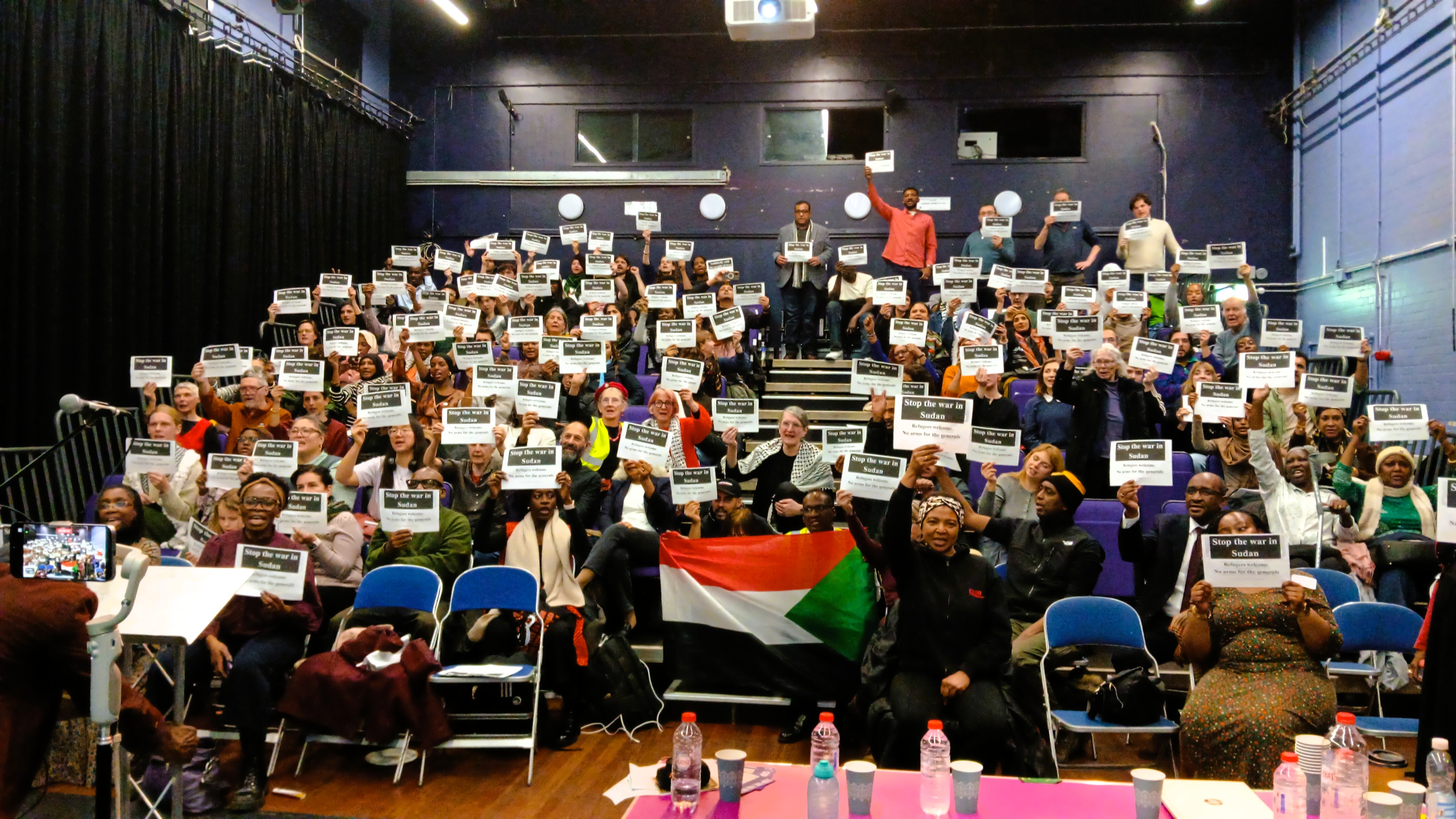
Conference Overview
- Opening Plenary: Sudan’s War — Revolution, Counter-Revolution and Imperialism
- Workshop Sessions
- Cultural Performance
- Final Plenary: Building Solidarity
- Statement and Voting Process
- Next Steps and Action Points
- Acknowledgements and Thanks
1. Opening Plenary: Sudan’s War — Revolution, Counter-Revolution and Imperialism
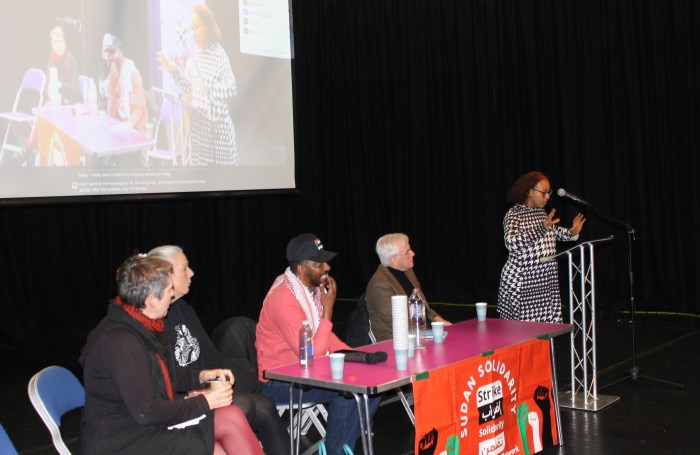
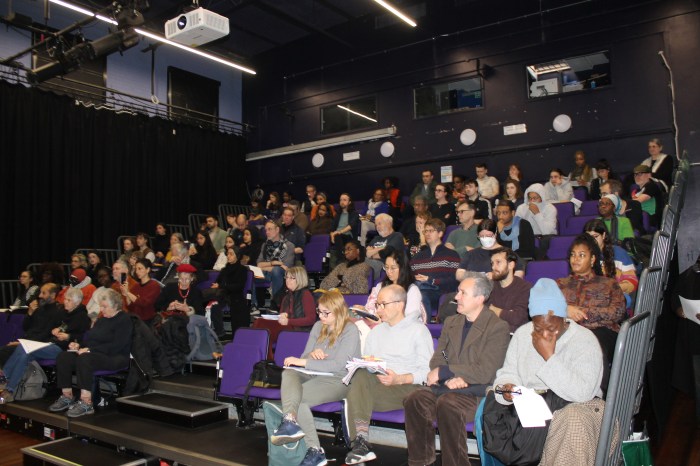
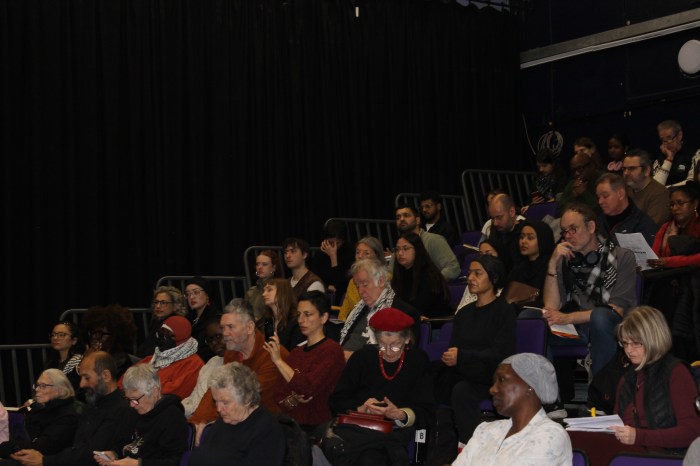
Chair: Rania Obead
Speakers: John McDonnell (MP for Hayes and Harlington, West London, and former Shadow Chancellor); Louise Regan (Chair of the National Education Union International Committee); Mohaned Elnour (Sudanese Lawyers Democratic Front); AbuBakr Adam (Sudanese Journalists Forum – UK); Anne Alexander (MENA Solidarity Network)
The opening plenary set the political grounding for the entire conference, situating the present war within the context of the unfinished promises of the 2018 revolution and decades of military rule, colonial intervention, economic inequality and class struggle. Speakers outlined how both the Sudanese Armed Forces (SAF) and the Rapid Support Forces (RSF) operate as competing militias whose rivalry has devolved into a counter‑revolutionary catastrophe that has displaced nearly 15 million people and destroyed essential infrastructure. Each addressed a critical dimension of the conflict — from international complicity and imperialist arms flows, to legal frameworks for justice and the role of trade unions in solidarity building.
MP John McDonnell highlighted the shocking scale of atrocities in Sudan and the near-total silence of the UK media, noting “the brutality of this one, the use of techniques and torture, mass rape as well. I think it’s shocked many of us… it’s almost been like a media silence all the way through”. He criticised the role of Western powers, explaining that “there’s no discussion of the reality of the role of western powers… the way in which they have funded [and] armed [the militias]. There’s no discussion of the reality that this is a proxy war… for control of resources, the gold, the agriculture, but also the strategic positioning of Sudan itself”.
He condemned the UK in arming the combatants: “we are complicit… in this barbaric oppression of the Sudanese people by both sides… giving them the very weapons that have been used in the massacres”.
On refugees, he condemned the UK’s treatment of Sudanese asylum seekers and the absence of safe routes, asking pointedly: “If a safe and secure route is fine for Ukrainians, what is the distinction with the Sudanese? Is it their ethnicity? Is it the colour of their skin?” He called for an urgent, dedicated Sudanese refugee scheme, alongside sanctions, asset seizures, and accountability for war crimes, insisting that “these war crimes, these war criminals will be convicted”.
He concluded with a call for justice and accountability: “make it clear that all of those that perpetrate… these war crimes… will be held to account”.
Louise Regan opened the conference by situating Sudan firmly within the tradition of international trade union solidarity, a commitment to supporting struggles for, “freedom from persecution and discrimination, and critically the right to say in how people are governed”. She underlined the catastrophic scale of Sudan’s crisis, noting that Sudan has topped the International Rescue Committee’s emergency watch list for two consecutive years and now represents, “the largest recorded and fastest displacement crisis in the world”.
She highlighted how over two years of war have displaced more than 12 million people, pushed over half the population into need of humanitarian aid, and brought the healthcare system “to the brink of collapse”. As an education union leader, she condemned the fact that “children have not had access to education over the last two years”, alongside escalating sexual and gender-based violence against women.
Regan reaffirmed the NEU’s political stance, stating that the union has “condemned the military coups”, opposed state-controlled unions, and called on the UK government to “support Sudanese refugees, provide safe passage, and stop arms sales that fuel the conflict”. She explicitly linked Sudan and Palestine as struggles rooted in “historical colonialism, imperialistic interference, and ongoing violence”.
Quoting the Palestinian BDS National Committee, she warned that it is “no coincidence” that tactics used in Gaza are being repeated in Sudan, including “sieges of cities, deliberate attacks on hospitals, starvation as a weapon of war, and the systematic targeting of civilians”. She concluded with a clear commitment: “We will continue to stand in solidarity… until all Sudanese people can enjoy the human rights and democratic freedoms to which they are entitled”.
Mohaned Elnour delivered a powerful call for justice, solidarity, and resistance against imperialism and the ongoing war in Sudan. He emphasised that “every migrant has the right – here to stay here to fight!” and condemned the violence between the Sudanese militias – the Sudanese Armed Forces (SAF) and the Rapid Support Forces (RSF) – describing the conflict as “a war on civilians rather than a war between two parties”. He highlighted horrific atrocities in El Fasher, including mass killings, sexual violence, and widespread destruction, stressing that both SAF and RSF have systematically targeted civilians: “The UN fact-finding mission has stated that these crimes, by both RSF and SAF, may amount to war crimes”.
Mohaned connected the war to international complicity, naming regional and global actors that prolong it, including the UAE, Egypt, Saudi Arabia, and British imperialism. He argued forcefully that “support for the SAF in this war is a reactionary position to take”, framing the fight for Sudan’s freedom as inseparable from anti-imperialist struggle. He underscored the importance of resisting attempts to divide solidarity movements, highlighting the crucial role of global solidarity in pressuring governments and institutions complicit in the conflict.
Celebrating the resilience of the Sudanese people, he affirmed that “the revolution is our path; we will never betray our glorious martyrs who gave their lives to pave this path”. Mohaned concluded with practical calls for action: signing petitions demanding human rights accountability, calling for the immediate release of detained Sudanese nationals, and supporting campaigns targeting arms factories fuelling the war. His speech resonated as both a testament to courage and a direct challenge to those enabling oppression, underlining that international solidarity must be active, principled, and grounded in the voices of those on the frontlines.
AbuBakr Adam highlighted the devastating impact of the war on Sudanese journalists, marking “one thousand days of armed conflict, atrocities, and systemic violation of rights”. He stressed that journalists are on the frontlines: “Without institutions, without legal protection, and in the face of two militarised actors—the Sudanese Armed Forces (SAF) and the Rapid Support Forces (RSF)—journalists have been treated not as civilians under international humanitarian law, but as combatants, suspects, and political actors”.
The war has destroyed professional foundations, leaving journalists displaced, dispossessed, and jobless. Media institutions were “looted, occupied, or destroyed… eliminating not only the physical infrastructure of journalism, but the economic basis of an entire profession”. The conflict has directly targeted reporters: “In March 2025, four members of Sudan TV—including photographer Magdi Abdel Rahman—were killed by a drone strike while covering the SAF takeover of the Presidential Palace in Khartoum”.
Adam underscored systematic oppression: “Violence against journalists has become systematic, organised, and normalised… amid a complete absence of accountability and continuing impunity”. Women journalists faced a dual burden: gender-based constraints layered on top of war-related violence. They were targeted through arrest, defamation, and intimidation, while also navigating restrictive social contexts that limited access to protection, evacuation, and financial support.
Adam concluded that protecting journalists is essential: “Three years into the war, Sudanese journalists are struggling to document and carry out their work in truth-seeking and truth telling. Protecting them… is a prerequisite for justice, accountability, and any meaningful reconstruction of Sudan’s civic life”.
Anne Alexander reflected on the revolutionary process in Sudan by returning to the early days of the uprising in late 2018, recalling exchanges with Sudanese comrades as mass protests erupted. She cited a message from a Sudanese activist that captured the turning point of the movement: “These are not just protests for bread and fuel, this is a revolution”. While the uprising began with spontaneous protests driven by economic desperation, Alexander argued that it was transformed into a revolutionary movement through the intervention of organised workers.
She emphasised the central role of the Sudanese Professionals Association in coordinating resistance and highlighted how workers in key sectors used collective power to confront the regime. Health workers, facing violent repression, “walked out on strike” and organised collectively in their workplaces, helping to push the movement forward. She also drew attention to the strategic importance of port workers, explaining that Sudan’s ports are vital to regional and global powers and therefore a critical point of leverage for workers.
Alexander vividly described how port workers in Port Sudan shut down operations by placing a shipping container at the gates using a crane, ensuring that nothing could move in or out. This, she argued, demonstrated workers’ unique power in the revolutionary process, concluding that “as workers, that is something that you can do”. The Sudanese revolution, she stressed, showed how organised labour can turn protest into transformative struggle.
2. Workshop Sessions
Participants moved into three thematic workshop streams designed to deepen collective understanding and identify actionable strategies:
2.1 Women on the Frontlines: Violence, Resistance and Survival
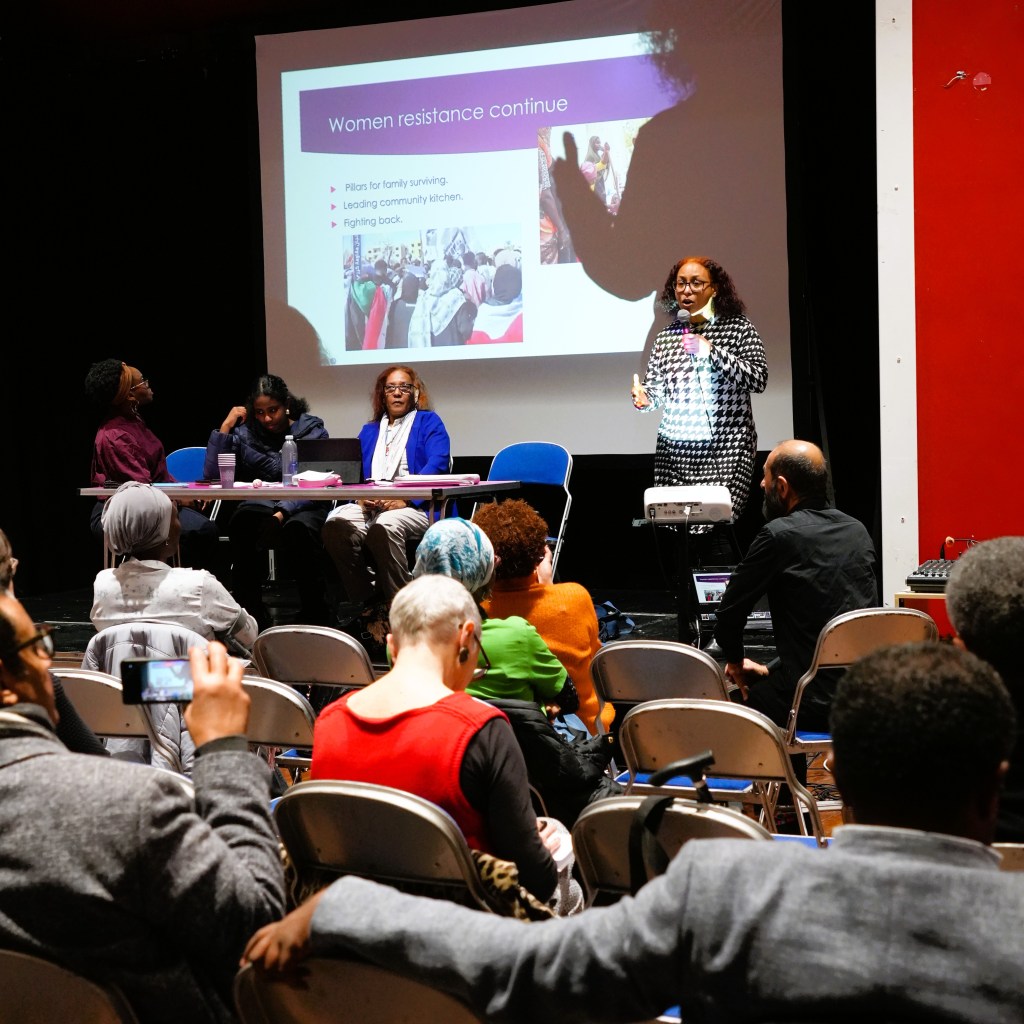
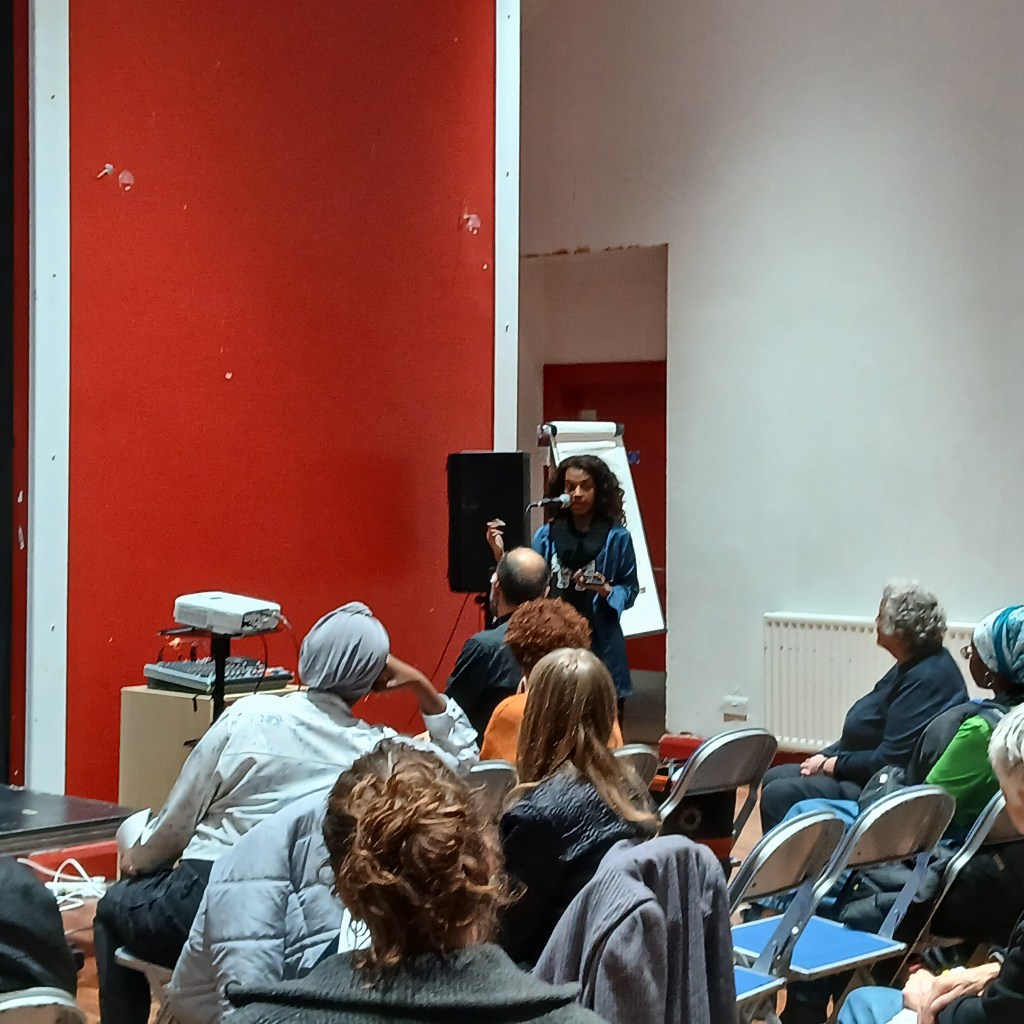
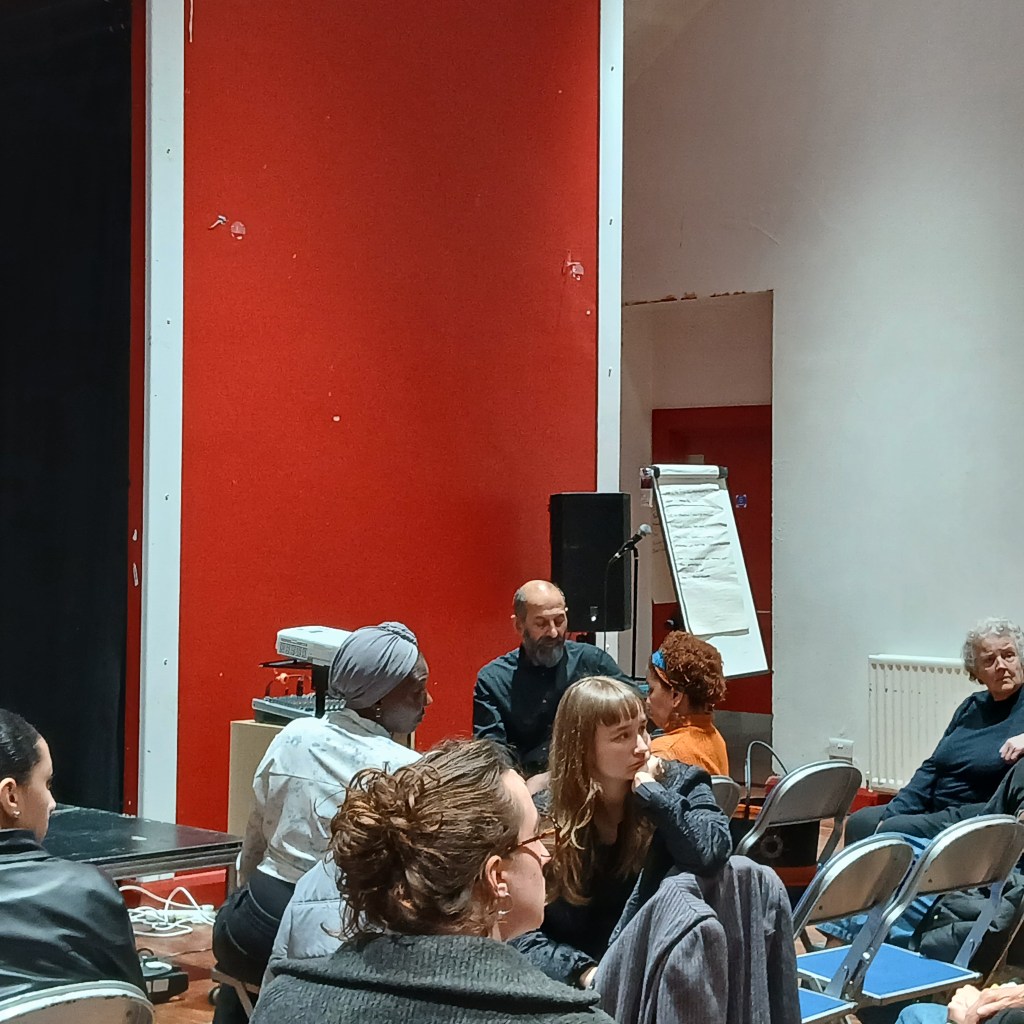
Chair: Rimaz Ahmed
Speakers: Dr Amira Osman (Political and Public Affairs Officer, Sudanese Women’s Union (UK & Ireland)); Rakie Ayola (Producer and three-time BAFTA-award-winning actress); Rania Obead (MENA Solidarity)
This workshop centred the voices and experiences of Sudanese women who confront systemic violence, displacement and exclusion, while simultaneously leading resistance and survival efforts in communities across Sudan. Speakers highlighted the gendered nature of war — including the weaponisation of women’s bodies — as well as grassroots women’s organising in emergency response, mutual aid and political mobilisation.
Dr Amira Osman highlighted the hidden and multi-faceted abuse faced by women, explaining that “people talk about sexual violence, but there are different types of violence against women”, many of which remain invisible. She described how some women were institutionalised or forced into extreme hardship with their children, yet despite these abuses, women have demonstrated remarkable resilience and solidarity.
Osman emphasised women’s active role in emergency response, legal aid, and humanitarian networks, providing food, healthcare, psychological support, and advocacy. She noted that women are also advancing education and digital activism, particularly in refugee communities, striving “to do something for those children who are missing education, for women who need some kind of advocacy”. Their activism extends across borders, connecting with other communities, including Palestinians and Iranians, to build solidarity networks that strengthen international support for Sudan.
She highlighted that women in Sudan continue to balance survival with activism. Even amid violence and war, they strive to sustain their families while participating in revolutionary action: “Women, despite the violence of the market, the violence in the streets, they were able… to make some kind of living”. Dr Osman stressed that this dual role of caregiving and activism demonstrates courage, resilience, and commitment to community, both locally and internationally.
Her presentation concluded with a recognition of the vital contribution of women in making war visible and fostering solidarity: women are not passive victims—they are “resistant, survivors, and active builders of peace and justice”.
Rakie Ayola, producer and three-time BAFTA-award-winning actress, spoke with humility, clarity, and urgency, positioning herself not as an expert but as a learner committed to solidarity. “I’m here to learn as much as I am anything else really”, she said, asking directly how those present could “actively support the women of Sudan”. The immediate answers—“raise awareness” and “fundraising”—were affirmed, but Ayola pushed further, insisting that awareness must be paired with action.
Drawing parallels with Palestine, she highlighted the gendered nature of violence, noting that the targeting of women in Sudan echoes Gaza, where women are targeted “because of their reproductive capacity”, stressing that “the same sorts of things are happening in Sudan as well”. She emphasised the importance of keeping alive the revolutionary vision of Sudan, particularly its potential to transform women’s lives.
Ayola identified a central challenge facing the movement: people know atrocities are happening, but ask, “What the hell can I do about it?” While donation is vital, she argued that people also want to know how to “stop more awful things happening”. She stressed the need to clearly identify perpetrators and give people practical, tangible actions they can take at home, however small.
She also spoke powerfully about inclusion, warning that movements must not alienate potential allies. “We need to give people something tangible”, she concluded, because when people feel they can act, “that’s how they will engage”.
Rania Obead powerfully highlighted the historic and ongoing role of Sudanese women as fighters, leaders, and pillars of resistance. She declared that Sudanese women are “not just a victim of rape and other things, but also they are a fighter. They are queens. They are survivors, and they are also in the front line of the December revolution”. Tracing their activism back decades, she noted that the fight for women’s rights in Sudan dates to 1952, when women secured equal rights and engaged in political movements despite systemic oppression.
Obead emphasised that the oppression of women is deep-rooted, shaped by wars such as Darfur and ongoing systemic targeting, including sexual violence. She highlighted women’s resilience in wartime, noting that despite “the horrible situation… millions of women leave their homes, many are raped, many can’t reach even the basic health care services”, they continue to lead grassroots organising, run resistance committees, manage communication networks, and sustain communities under extreme conditions. During the December Revolution, “70% of the people on the street are women”, many wearing vibrant colours to signal defiance, resilience, and hope.
She underlined women’s central role in survival and revolutionary action: “Women are still fighting. Women are still making the resistance a reality. Women still want to make revolution that they want to change the situation”. Obead concluded that the Sudanese revolution lives on through women’s courage, determination, and unwavering leadership, inspiring both change in Sudan and solidarity across the world.
2.2 Grassroots Power in a Collapsing State
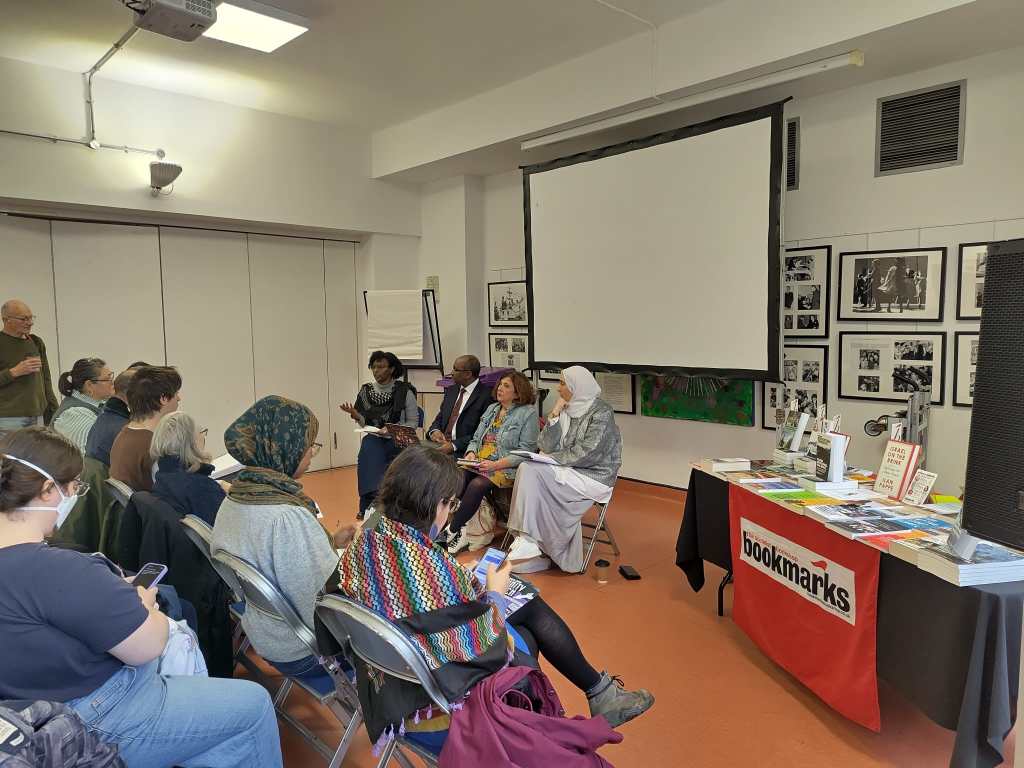
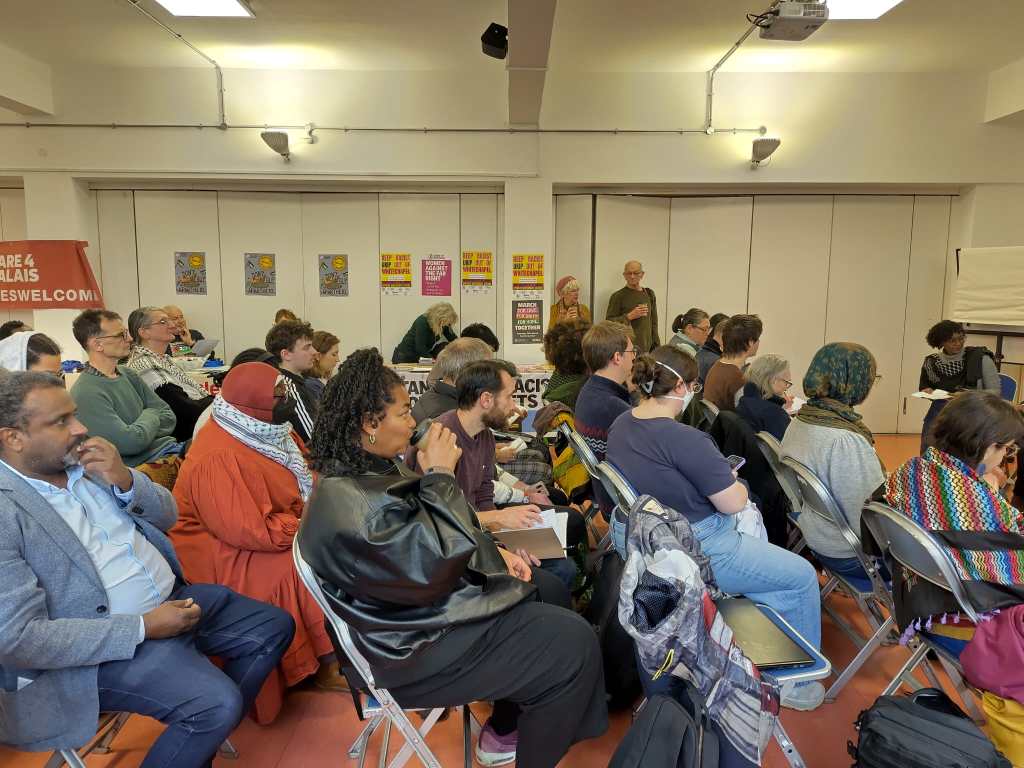
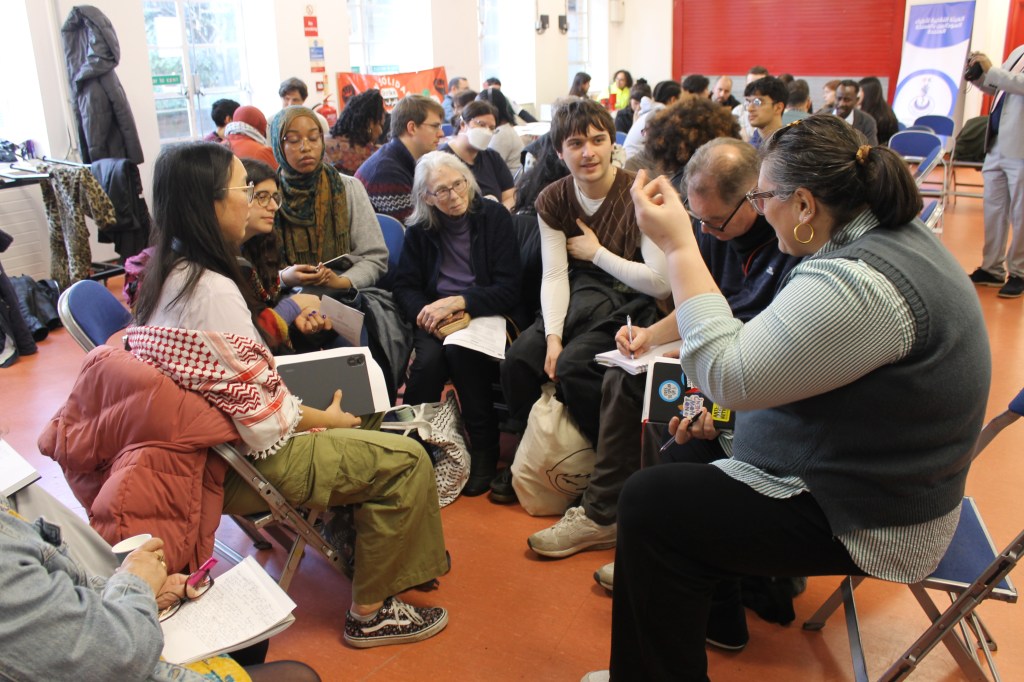
Chair: Halla Yagoub
Speakers: Dr Yasser Abdelhafeez (Vice President, Sudanese Doctors Union – UK); Maria Chondrogianni (President of the University and College Union (UCU)); Dr Huda Mahmoud (Global Health BDS for Palestine)
This session examined how neighbourhood resistance committees, trade unions, emergency response rooms and community networks have stepped in where the state has failed. Delegates shared stories of self organisation in health, education, food distribution and protection — not only in Sudan but also in solidarity contexts such as Palestine. Discussions identified lessons in resilient community organising under conditions of war and displacement.
Dr Yasser Abdelhafeez, Vice President of the Sudan Doctors Union–UK, delivered a stark account of Sudan’s unfolding humanitarian catastrophe, thanking MENA Solidarity and stressing the urgency of international action. He described the situation as “an unprecedented humanitarian emergency”, with “over 30 million people… displaced” and “nearly 20 million people” in daily need of life-saving assistance, while global funding remains “dangerously insufficient”.
Focusing on healthcare, Abdelhafeez explained that the health system has been “systematically targeted”. Citing the World Health Organization, he noted that there have been “more than 200 violent attacks on healthcare facilities”, resulting in “over 1,800 deaths”, alongside the detention, torture, and killing of health workers “simply for doing their jobs”. As a result, the system has “collapsed almost entirely at the grassroots level”.
Yet he emphasised that communities have stepped in. “When systems collapse, communities step in”, he said, stressing that “mutual aid is power, and collective care is resistance”. Since the December Revolution, the Sudan Doctors Union has supported hospitals, rebuilt healthcare centres, established a blood bank in West Kordofan, and delivered life-saving equipment across Sudan and in refugee settings, all in partnership with local responders.
Abdelhafeez highlighted the union’s global solidarity work, transforming professional networks into “life-saving action”, and outlined a simple vision: “one struggle, one goal, collective power”. He concluded by calling for protection of health workers, direct funding for community-led healthcare, and accountability for violations, insisting that “safety matters. Survival matters”.
Donations to the Sudanese Doctors Union could be paid via this link.
Maria Chondrogianni, representing the Post-16 Education Union (UCU), delivered a powerful call to action, grounding her remarks in the ongoing humanitarian catastrophe in Sudan. She opened by stressing the hidden but catastrophic scale of the crisis: “The worst humanitarian crisis in the world… famine, insecurity, genocide, displacement is taking place also in Sudan”, and criticised the media for failing to bring global attention to it. Chondrogianni highlighted the systematic impact on children, demanding basic human rights including food, water, peaceful sleep, and education. “We need to demand to keep on hearing about it, and we need to demand to put an end to it”, she insisted.
She emphasised the destruction of Sudan’s educational infrastructure, noting that universities—historically central to national unity and development—have been devastated. Sudan’s 62 universities, serving over 600,000 students and 20,000 staff, face disruption due to attacks and displacement. Students in safer zones continue studies through hybrid models, but access is limited by poor internet and financial hardship. Chondrogianni warned of the severe psychological toll: trauma, anxiety, and family hardship compound the crisis, further marginalising education.
Linking local and international solidarity, she invoked global trade union support: “Educators and education-related organisations across the globe… have repeatedly called for all parties to ensure that education facilities are protected”. She concluded with a call to action rooted in solidarity: UCU supports Sudanese demands for “an immediate ceasefire, immediate humanitarian aid, and the cancelling of Sudan debt”, stressing that “as trade unionists, we have a duty to make these demands a reality”.
Dr Huda Mahmoud, speaking from her experience in Palestinian grassroots activism, delivered a compelling account of practical solidarity and healthcare support. She highlighted the critical importance of supporting communities on the ground, stating, “It is not to take over, it is not to dictate, it is to add and establish layers of defence and support”.
Mahmoud stressed that these efforts focus on real needs identified by the communities themselves: “Never a decision about me without me. We’re here… to listen and to support”. Examples included teaching civilians how to control bleeding, care for newborns, and prevent deaths from cold exposure. Mahmoud noted the importance of flexibility and adaptation in the face of blockades and resource shortages, describing how pre-hospital aid had to teach communities to fend for themselves with what little they had.
Using examples from Palestine, she argued that Sudan could benefit from these models, including virtual training of allied healthcare professionals to rapidly scale community support. Concluding with a practical vision for Sudan, she outlined how virtual and on-the-ground training of civilians and allied healthcare workers can rapidly expand community capacity: “Doctors teach virtually… who will in turn go out and teach the community”. Mahmoud’s address underlined the power of grassroots solidarity, practical action, and listening to those directly affected.
2.3 Refugees, Racism and the Struggle for Dignity
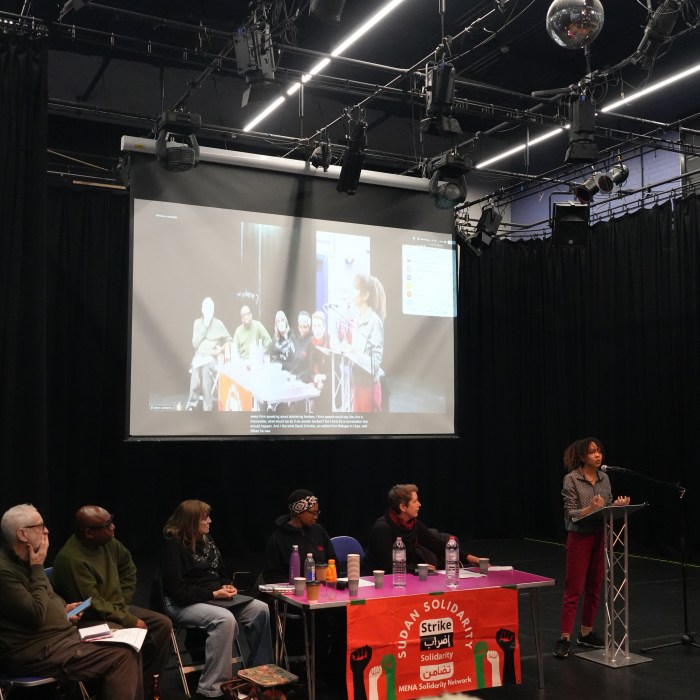
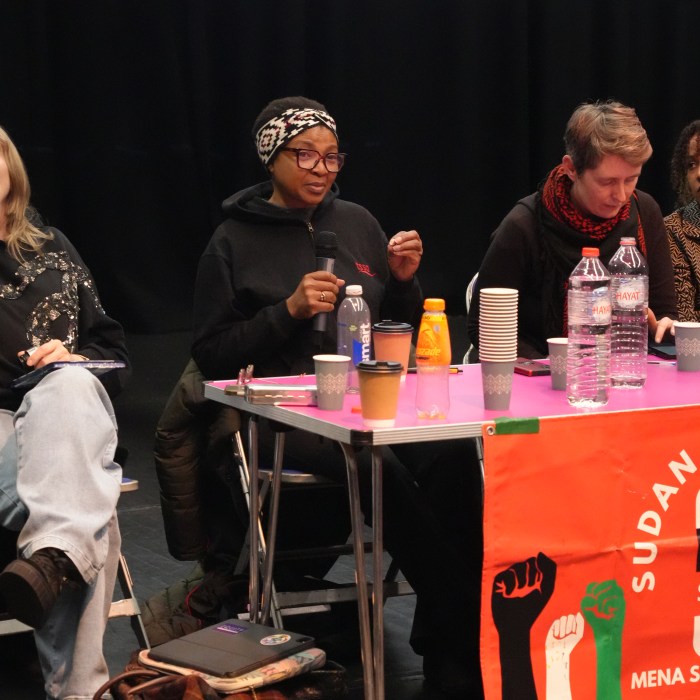
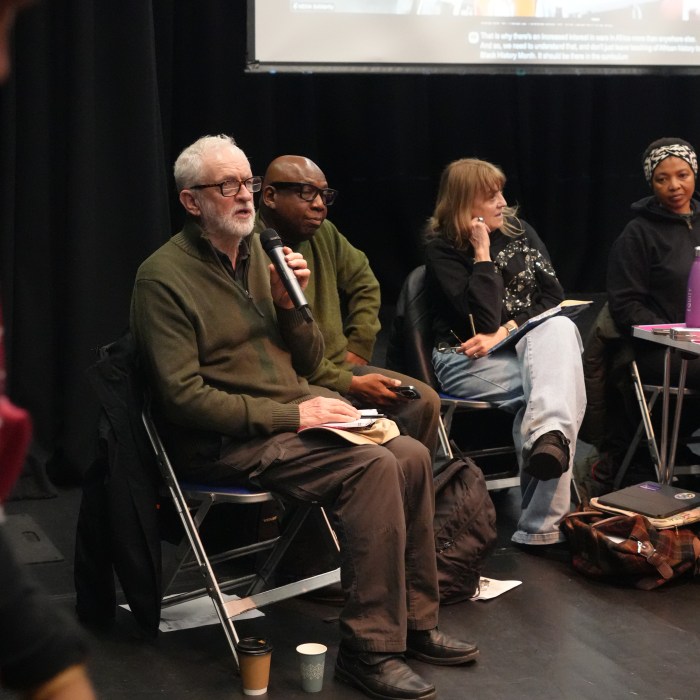
Chair: Anne Alexander
Speakers: Gary McFarlane (Stand Up To Racism organiser, journalist and NUJ union activist); Afnan Khalid (The Decolonial Centre, Sudanese lawyer); Mary Sithole (National Treasurer of the Transport Salaried Staffs Association (TSSA) union); Lynda Rooke (President of Equity); Jeremy Corbyn (MP for Islington North and former Leader of the Labour Party)
This workshop explored patterns of systemic racism — especially within UK and European policies — that compound the suffering caused by war, and how activists can build campaigns that unite anti‑racism with solidarity for refugees. Speakers also discussed the Together Alliance protest on 28 March against racism and fascism and addressed how anti‑migrant rhetoric undermines collective humanity and calls for safe passage and dignified treatment.
Gary McFarlane’s speech framed the refugee crisis as inseparable from war, imperialism, and racism, rejecting the notion that displacement is “something out there” unrelated to Europe or the US. He argued that “the history of wars and imperialism… is responsible for the reason why there are refugees in the world today”, noting that “15 million Sudanese people are now displaced”. From this, he called for open borders and safe routes, insisting that Europe and Britain must take responsibility for people displaced by wars they helped create.
He highlighted the double standards in asylum policy, pointing out that when war broke out in Ukraine, governments said “we should open our door to the Ukrainians”, but the same is never applied to “brown and black peoples”, identifying this as racism. McFarlane warned that “racism is becoming more rampant… and the cutting edge to it sadly is Islamophobia”.
Challenging myths about migration, he noted Germany’s experience, where refugees strengthened the economy and pensions, asserting that “from a purely economic point of view, Europe needs more migrants”.
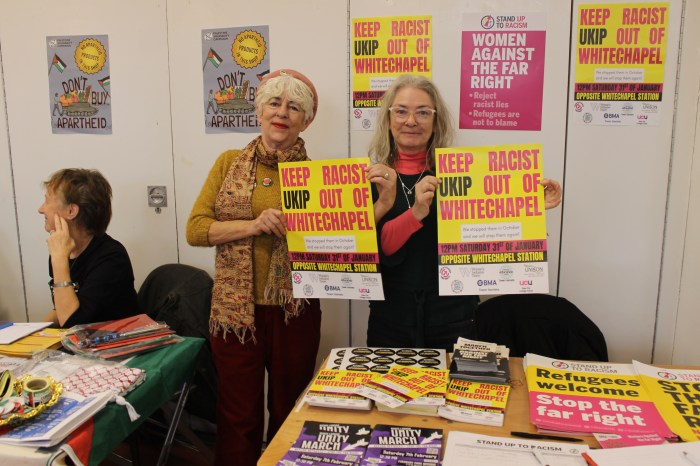
He concluded with a call for working-class unity: “we have more in common as working people… than the people who run our societies”, and urged mobilisation against the far right, naming key events: “31 Jan in Whitechapel against UKIP; 7th Feb North London; 28th March—Together Alliance; 16th May—Robinson demo; May elections”. His core message was solidarity and collective action: the fight against racism, imperialism, and Islamophobia is ongoing, and “dignity for all” should guide every campaign.
Afnan Khalid highlighted the human cost of the asylum system and stressed vulnerability when their families, identities, and humanity are taken away. Systemic change is needed: “And that would be only through abolishing capitalism and borders. And I don’t see any alternative otherwise”.
Khalid called on the European working class to challenge their governments: “They need to hold their governments accountable for using the taxpayers money to pay Malaysia… Italy has just renewed their deal with Libya to guard the borders for them against migration to Spain from Morocco… When the UK was part of it, they came to Khartoum in 2014 to sign the Khartoum Process where they gave resources to the RSF… And then later on one that cost the UK, 700 million if I’m not mistaken… giving that money to the African people to kill their fellow Africans”.
She demanded the African working class: “Hold their governments and ruling class accountable for taking money”. They should “fight imperialism and refuse to be the arm of the EU that fuels those atrocites against their own people”.
Her call was clear: “Think globally and act locally”.
Mary Sithole described it as “an honour… to stand in solidarity with the people of Sudan, with refugees everywhere, and with all those resisting racism, war, and imperialism”. Drawing on her upbringing in post-colonial Zimbabwe, she explained that independence did not dismantle colonial structures, as “economic inequality, extraction, and instability remained deeply embedded”. Her own migration, she stressed, was shaped not by individual choice but by “global systems of inequality rooted in colonialism and imperial power”.
She directly challenged racist narratives about migration, stating clearly: “We are told migrants come to the UK to live off the system… That is wrong.” Sithole exposed the legal reality that migrants have “no recourse to public funds”, receive “no benefits” and “no housing support”, while paying taxes and significant upfront costs, including the Immigration Health Surcharge of “£1,035 per person, per year”. She argued that claims of migrants “taking” are in fact “political scapegoating, racism used to distract from the true causes of crisis: war, austerity, privatisation, and inequality”.
Turning to Sudan, she described the war as “a counter-revolutionary war rooted in militarism and imperial interference”, in which civilians are trapped and democratic aspirations crushed. She warned that racism “is not accidental. It is political, serving to divide working people and protect those in power”.
Speaking as a frontline transport worker and trade unionist, Sithole reaffirmed that “solidarity cannot be selective”, concluding powerfully: “Solidarity is not charity. It is a commitment. It is a practice. And it is a responsibility”.
Lynda Rooke, actor and president of Equity, the UK trade union for 50,000 entertainment workers, expressed solidarity with the Sudanese people and other struggles worldwide, noting that her union works globally through the International Federation of Actors. She drew on her own Irish heritage and her father’s experience of discrimination, observing that “the systematic racism and scapegoating of current refugees and migrants… stems exactly from that power” rooted in colonialism, slavery, and the capitalist system”.
Rooke emphasised that divisions—whether based on race, gender, disability, LGBTQ+ identity, or class—are socially constructed to serve capitalist interests, warning that “the rise of the far right emboldened that notion of self-interest”. She called on trade unions and activists to challenge government failures toward refugees, tackle racism in all its forms, and support marginalised communities globally, referencing Sudan, Palestine, and LGBTQ+ struggles.
Within the entertainment sector, she highlighted Equity’s campaigns for workplace dignity and fair representation, including “Dignity in Digs” to protect members’ safety in housing and ensuring stages and screens reflect modern Britain. She cited victories such as hair and makeup clauses to safeguard Black members, and initiatives supporting authentic portrayals of Gypsy, Roma, and Traveller communities.
Rooke concluded with a rallying call for collective action, stressing that “our organised collective strength is the way forward. You leave nobody behind. Absolutely nobody”, reaffirming solidarity with Sudan and all communities facing oppression, and warning that freedom of speech and rights will be under threat if the far right gains power.
MP Jeremy Corbyn opened by expressing solidarity with the Sudanese people, highlighting the devastating human cost of the war: “The horrific war… has taken the lives of tens and tens and tens of thousands of people. Destroyed the infrastructure, destroyed the education system, the health system, and so much else”. He criticised the role of global and British interests, observing that “the only beneficiaries from this war are the mineral companies… and the arms industry that is supplying weapons in massive quantities.” Corbyn called attention to Britain’s involvement, particularly arms sales and contracts with the UAE, which fuel the conflict, warning that failure to challenge the power of the arms industry leads to more deaths while a small number profit grotesquely.
He linked the war to the refugee crisis, noting that thousands perish attempting to reach safety: “You’ve got to be desperate when a leaky boat on a dangerous ocean seems safer than staying on the land.” Corbyn criticised the media’s silence, pointing out that major British outlets largely ignore Sudan: “Where is the media on this? Where is the reporting on this? Where is the outrage on this?”
Addressing the rise of the far right in Britain, he emphasised historical lessons, citing the 1936 East End and 1977 North London anti-fascist mobilisations. Corbyn urged linking anti-racist campaigns with social justice, housing, wages, and public services, highlighting migrants’ contribution to society: “Our services, our health, our welfare is in part because of the wonderful work done by those that have migrated… and made our society so much better, so much stronger, and so much richer.” He concluded that unity is essential: “Together, we can defeat racism… together we can be in solidarity with the people of Sudan in their search for peace and justice”.
3. Cultural Performance
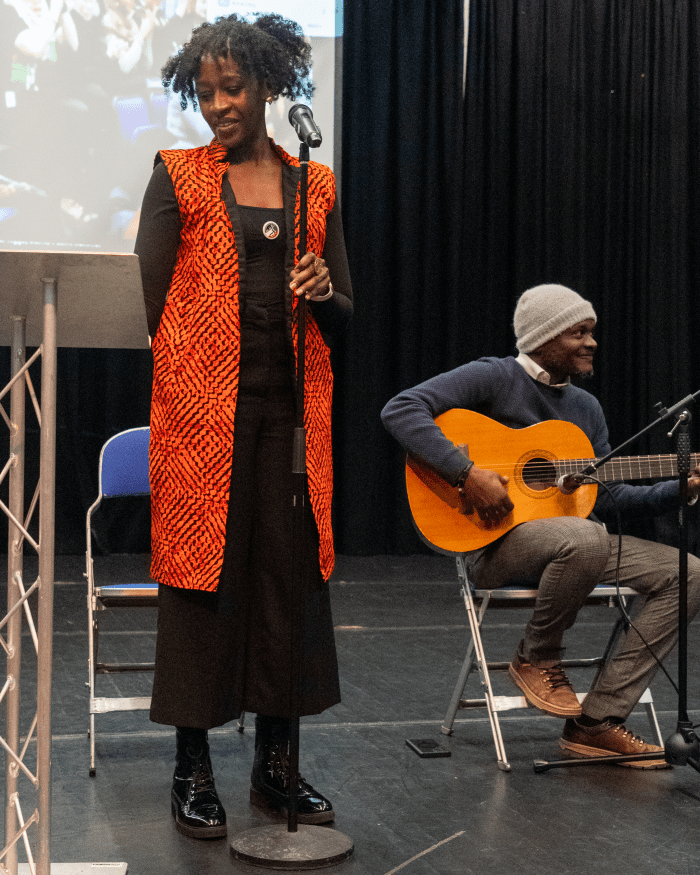
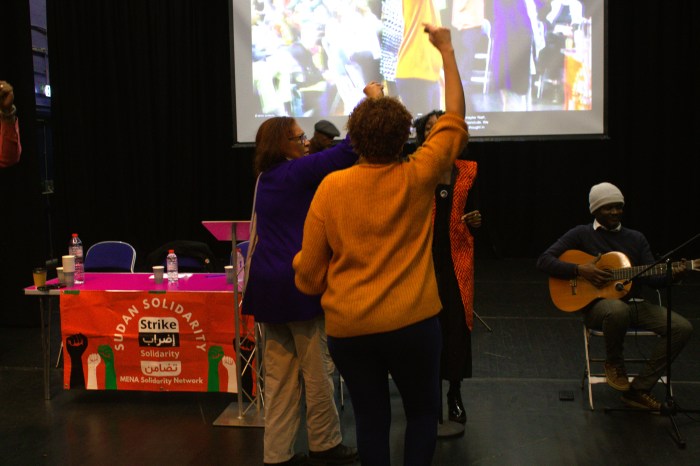
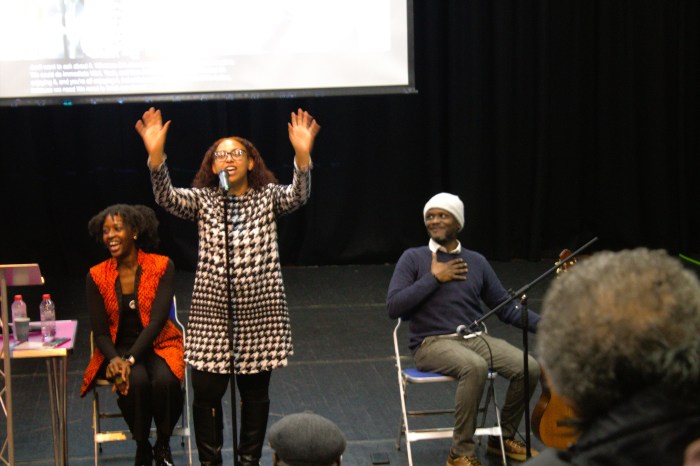
Performers: Jumana Eltgani & Ahmed Allord
The midday interlude featured a cultural performance from Sudanese artists — music, poetry, and expressive arts that reflected both the beauty of Sudanese heritage and the resilience of its people in the face of violence and displacement. Soulful guitar performances, accompanied by songs and poetry, provided a moment of collective reflection, reinforcing the emotional stakes of the political work being discussed and reminding delegates of the human reality behind the statistics and policies. The performances created a space to connect with Sudan’s culture and struggle, blending art and activism to strengthen solidarity across the conference.
4. Final Plenary: Building Solidarity — Organising Against Racism, War and Destruction
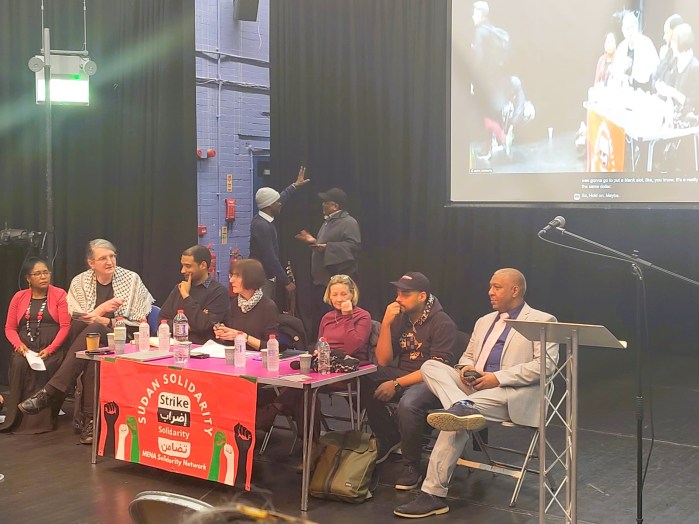
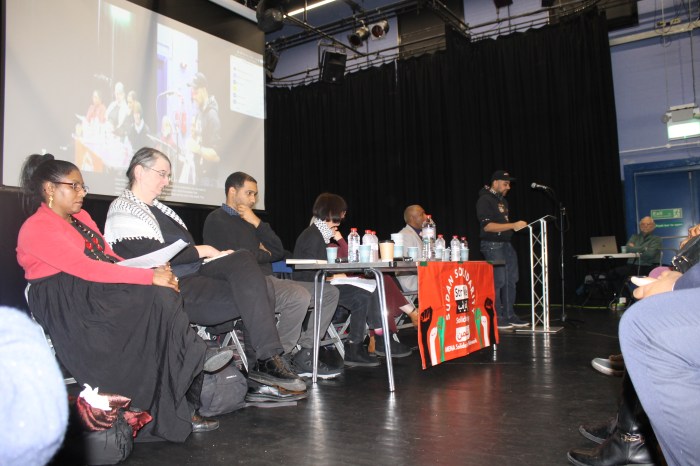
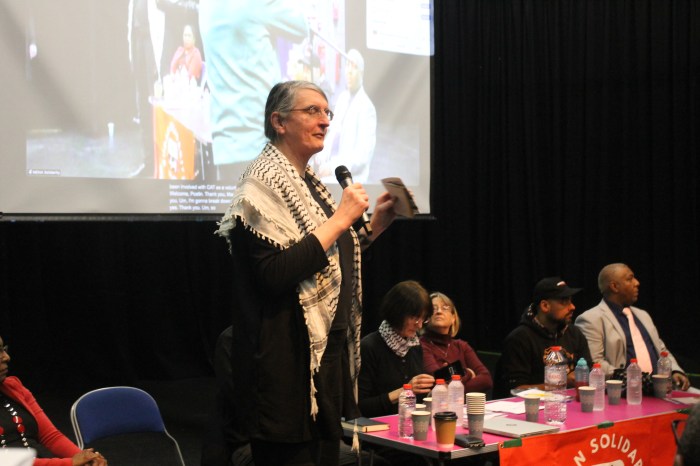
Chair: Miriam Scharf
Speakers: Kirsten Bayes (Outreach Coordinator at Campaign Against Arms Trade and member of its Board of Directors); ; Shabbir Lakha (National Officer, Stop the War); Mashair Saeed (Activist, Sudanese Women for Peace); Ginnette Gantshuk (Chair of the National Trade Union Side (NTUS) in HMPPS, Public and Commercial Services Union (PCS)); Dr Luigi Pivano (SI Cobas union (Italy)); Khalid Sidahmed (MENA Solidarity)
The closing plenary focused on translating knowledge and solidarity into coordinated action. Speakers explored how to strengthen collaborations between trade unions, anti‑war campaigns, anti‑racism organisers and grassroots solidarity movements. The emphasis was on strategic campaigning — from mobilising on UK streets to linking Sudan’s struggle with global movements for justice and peace.
Kirsten Bayes focused on exposing the arms trade as a central driver of Sudan’s war and on how collective resistance can challenge it. Speaking from the perspective of Campaign Against Arms Trade, the speech set out clearly “what we’re resisting, how we resist it, and how we all work together”. Sudan was described as “the hub of wars between two regional powers”, with the UAE backing the RSF and Saudi Arabia backing the SAF—both, Bayes stressed, “armed and supported by the UK and by the United States”.
Although Sudan is supposedly under an arms embargo, Bayes explained that “in theory Sudan has an arms embargo… in practice the UAE is arming Sudan”, often through British components embedded in wider systems. This modern arms trade relies on indirect supply chains: “These days… what you find is the exports still take place, but there’s components built into systems from other countries”. Examples included drone technology passing from Turkey to Pakistan, with parts traced back to “an arms company in Brighton”, and fighter jets containing “British made ejector seats”.
Bayes warned that if these exports continue, “the UK must ban those exports onto Sudan, otherwise it’ll be breaking its embargo”, while acknowledging scepticism that the government will act, given its record on Palestine.
On resistance, Bayes argued powerfully that it must begin with culture and human connection. “Just as this session started with songs and poetry, our resistance starts there too”. Sharing Sudanese stories builds unity, which can then be translated into action—from protests to disrupting supply chains—and ultimately into real victories that help “stop the war and create the space… to create a new and even better Sudan”.
Shabbir Lakha argued that the world is entering a dangerous new phase marked by “a change in the imperialist order of the world”, driven by an “irreparable and persisting crisis in global capitalism since 2008” and the relative decline of US imperial power after wars in Iraq, Afghanistan, Syria, Libya and Yemen. This crisis is expressed through escalating wars and threats, including “the ongoing genocide in Palestine and in Sudan”, threats against Iran, Venezuela and Greenland, and intensifying inter-imperialist rivalries.
Lakha highlighted unprecedented global militarisation as a key symptom, noting that “the United States has announced that it will be upping its military budget by 50% from 1 trillion to 1.5 trillion dollars”, while Europe has voted for an €800 billion increase alongside the stealth reintroduction of conscription. Sudan, Lakha stressed, is not an isolated tragedy but “a product of the imperialist architecture of the world”, sustained through Western complicity and the backing of regimes such as the UAE and Saudi Arabia.
The speech also linked imperialism directly to the rise of the far right, warning that this is “inseparable from the growth of the far right and fascism across the world”, fuelled by decades of Islamophobia and the demonisation of refugees from countries devastated by Western intervention. Concluding with a call to resistance, Lakha stressed that “our strength is in our numbers and is in our organisation”, invoking Malcolm X’s reminder that “we’re not outnumbered, we’re out organised”. He urged unity, mobilisation, and sustained struggle against imperialism and fascism, drawing inspiration from the 2019 Sudanese revolution as living proof that collective action can break entrenched systems.
Mashair Saeed reflected on the crisis in Sudan and its global connections, emphasising the importance of grassroots solidarity. Saeed framed Sudan not only as a site of suffering but as “a story of resistance”, highlighting how Sudanese communities continue to organise in neighbourhoods, workplaces, and local networks despite war, displacement, and famine. She stressed that Sudanese people are “not passive victims, they are active political agents”, with unions, resistance committees, and mutual aid networks sustaining both humanitarian and political struggles.
Saeed emphasised that international solidarity carries political responsibility: “Our role as [the] international community…is not to replace this work, but to define it, amplify it, and to stand alongside it”. She linked Sudan’s war to British and global policies, noting that “arms sales, foreign policy decisions, and cooperation interests link our government directly to violence elsewhere”, while Sudanese refugees face “detention, deportation, and hostile environmental policies” at home.
She framed the struggle against war, racism, and imperialism as inseparable, arguing that solidarity must be grounded in “First, listening to the Sudanese voices and following Sudanese leadership. Second, long-term commitment…Third, political action, challenging our own government, institutions, and cooperation”.
Saeed concluded with a powerful call to action, connecting Sudan to global struggles: “From Sudan to Britain to Palestine, our struggles are connected…From Gaza to Darfur, stop killing, stop the war. Our solidarity must be international”.
Ginnette Gantshuk opened by expressing pride in campaigning for human rights: “Proud to be at the forefront and campaign for human rights and against inequality and injustice around the world”. PCS opposes hatred in all forms: “PCS trade as a trade union opposes all forms of racism and fascism and hatred… our union developed an anti-racist, anti-fascist strategy… updated that strategy in 2019 and then again in 2022 to take into account a changing nature of the threat”.
International solidarity is central: “Our union’s broader international solidarity… embraces support for and in defence of human rights across a number of countries and regions… Human rights… should not depend on what country we live in”. The union condemns government complicity: “Communities have been destroyed, essential services have collapsed on human rights abuses, and… governments have actively fuelled war through diplomatic, military and financial support”.
Regarding Sudanese refugees, PCS commits to action: “The UK government provide unrestricted humanitarian protection for Sudanese refugees… that Sudanese refugees be treated with the same generosity extended to Ukrainians… establish safe and legal routes for Sudanese people fleeing conflicts… support a Homes for Sudan scheme… family visa scheme for Sudanese families living in the UK”.
The speech concluded with solidarity for Sudanese workers: “PCS sends a message of unwavering, unwavering solidarity to Sudanese workers and trade unions. Their courage in the face of violence and chaos is a beacon for all of us”.
Dr Luigi Pivano, speaking on behalf of the Italian grassroots trade union SI Cobas, delivered a militant internationalist intervention rooted in working-class resistance to imperialism and war. He began by underlining the central role of mass mobilisation in Britain, stating plainly that “without the British marches, Europe would not be inspired to protest and start strikes for Palestine”. These mobilisations, he argued, have helped break isolation across borders and shown how sustained street pressure can translate into organised workplace action.
Pivano explained that SI Cobas is a grassroots trade union that opposes any imperialist act, grounding its politics in direct struggle rather than institutional compromise. In 2025 alone, the union organised three general strikes, culminating on 3 October, when “more than a million workers participated in the strike”. These actions, he stressed, demonstrate the power of collective working-class organisation in confronting governments and corporations profiting from war.
He warned that the current escalation in militarisation and warfare “must not be used to profit from wars”, insisting that trade unions have a responsibility to expose and challenge their own governments’ roles. “We need to stop arming and start highlighting our governments’ responsibilities”, he said, identifying the arms trade as central to sustaining imperialist violence.
Turning to Sudan and the wider region, Pivano argued that “our goal is to destroy the UAE dream and to isolate it diplomatically”, alongside other imperialist states fuelling war and repression. Drawing lessons from Palestine solidarity, he urged activists to “organise a long campaign until victory”.
Concluding defiantly, he rejected fear of repression: “We should not be afraid of repression—it means the government is struggling and we are doing our job”. For Pivano, this is not optional but a responsibility: “It is our duty to fight against imperialism—for freedom, peace, and justice”.
Khalid Sidahmed closed the conference by grounding the political discussions in the urgent human reality of Sudan’s war and the responsibility of collective action. He insisted that the Conference Statement, distributed at the start of the final plenary, must be a tool for collective struggle. As he reminded the audience, “while we sat here talking and organising, there are people dying in Sudan”, with “over a hundred and fifty thousand people… dead, murdered”, and nearly a third of the population displaced. Revolutionary forces, trade unionists, and women are being systematically targeted, with “women’s bodies… used as weapons of war”—crimes he stressed are “not accidental… these things are by design”.
Sidahmed was unequivocal that both sides of the war are criminal militias, rejecting any attempt to legitimise either force. He traced their origins to colonialism and imperialism, describing the Sudanese Armed Forces as “created by the British Empire” and naming them “the mother of all militias”, from which the RSF was later formed, with the backing of the EU under “Khartoum Process”. This war, he argued, is not about protecting Sudan, but about crushing the 2018 revolution and breaking the will of the Sudanese people. It is fuelled by imperialist powers through arms sales, finance, and political cover—“the arms trade”, he said, “is at the heart of it”.
Reflecting on the conference itself, Sidahmed welcomed the “brilliant discussions” and “amazing speakers”, but cautioned against complacency. “The system is not going to change by itself”, he said. “We have to fight for the change—for liberty, justice, equality, and dignity as human beings”. He was clear that this would not come from “just talking or asking nicely”, because “the government in this case is the oppressor and we are the oppressed”.
Linking Sudan to wider struggles, Sidahmed made clear that “what’s happening in Sudan is not isolated from what’s happening in Palestine, Iraq, Libya, Yemen, Congo, and the list goes on… it’s the same fight”—against racism, fascism, and imperialism. He urged unity across movements and borders, stressing that resistance is “not a privilege… it’s a duty”, and that change can only be won if “we work together and we build together”. He concluded by inviting delegates to democratically endorse the Conference Statement, paving the way for the Statement and Voting Process that followed.
5. Statement and Voting Process
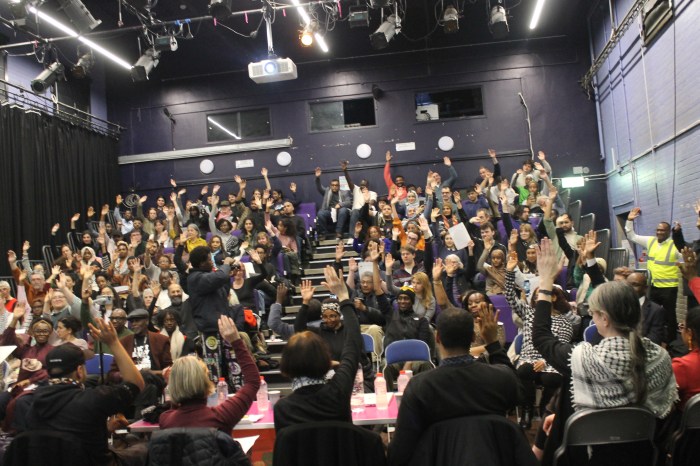
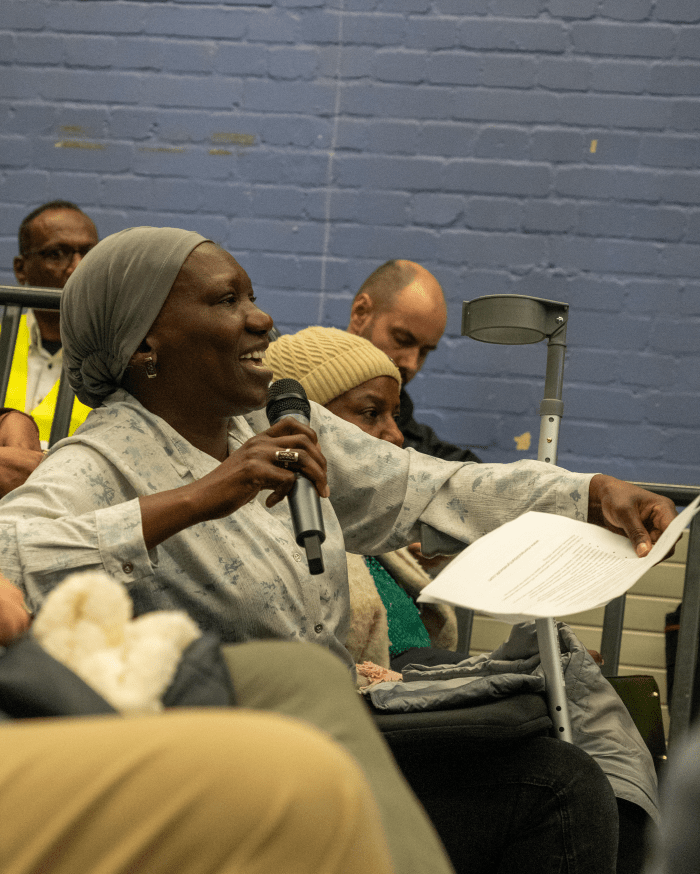
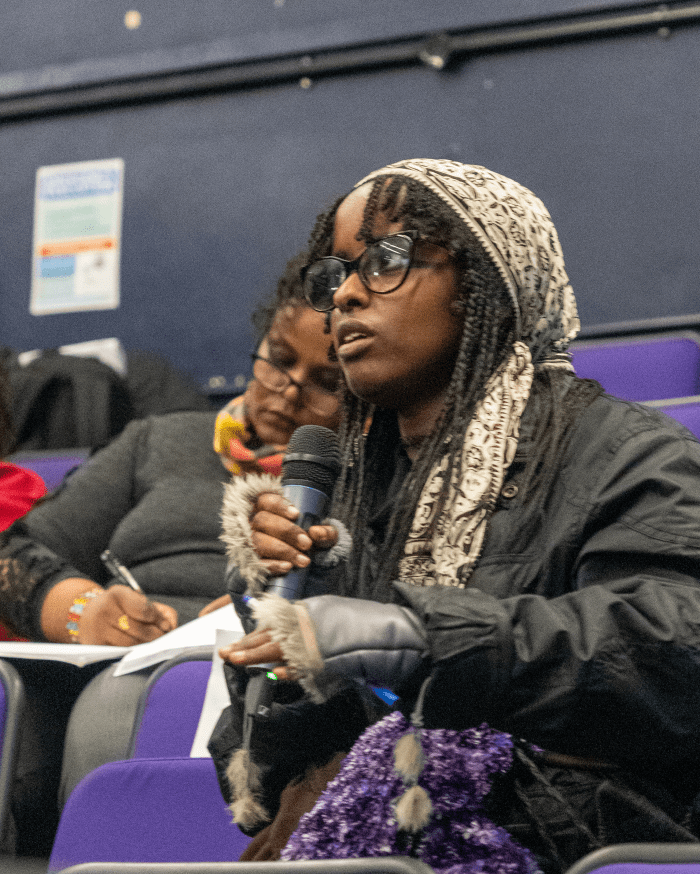
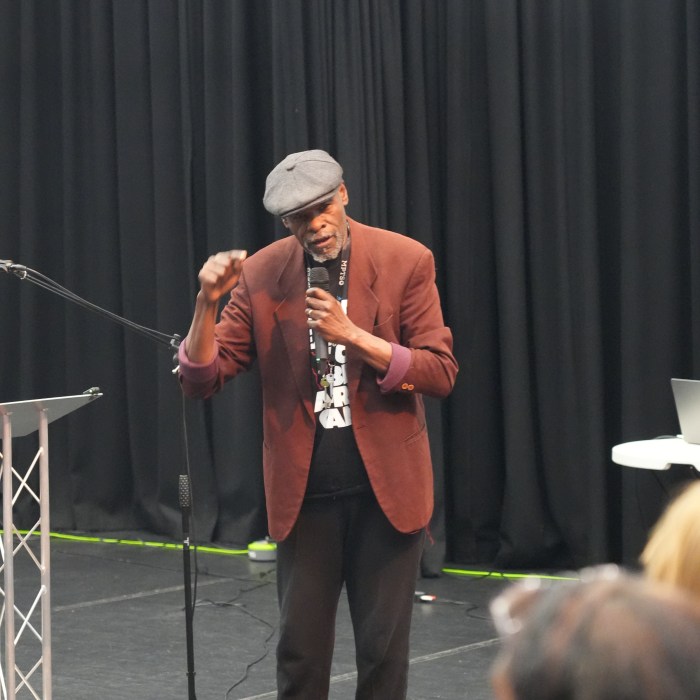
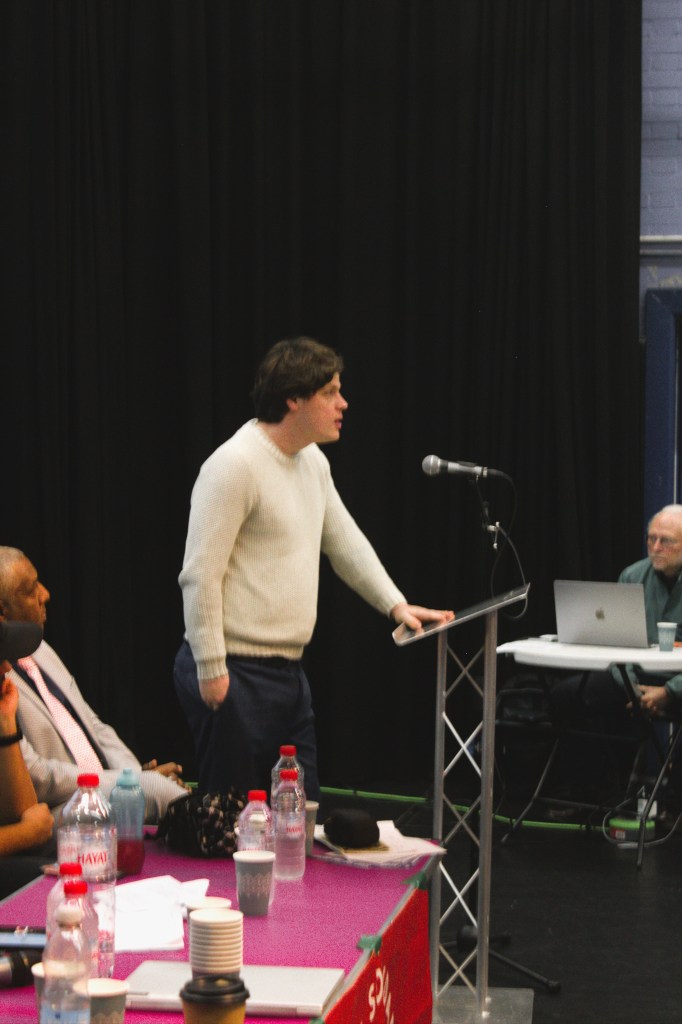
At the culmination of the final session, delegates deliberated and voted on the Sudan Solidarity Conference 2026: Statement and Demands. The statement clearly articulated the collective position of attendees regarding:
The Sudan Solidarity Conference 2026 has brought together trade unionists and activists from Sudan, Britain, and beyond to demand an immediate end to the war between the Sudanese Armed Forces (SAF) and the Rapid Support Forces (RSF)—a war that is tearing Sudan apart and threatening regional and international peace.
Since the outbreak of the war in April 2023, following the counter-revolution against the 2018 revolution, both forces have displaced nearly 15 million people, killed hundreds of thousands, and destroyed Sudan’s infrastructure, health and education systems, and cultural heritage. Starvation, denial of medicine, the destruction of communication systems, and rape have been used as weapons of war. Revolutionary forces, trade unionists, activists, politicians, and all those who oppose the war have been deliberately targeted.
We note that both the SAF and the RSF were deployed as mercenaries to Yemen on behalf of Gulf states and that they jointly overthrew Sudan’s legitimate transitional government in 2021. For decades, both forces have committed genocide and crimes against humanity. The SAF controls over 82% of stolen wealth held outside Sudan’s economy, while the RSF controls vast resources, technology, and financial empires. We therefore recognise both fighting forces as militias.
We condemn the role of imperialist powers, including Russia, the European Union, the United States, and the British government, assisted by the African Union in undermining Sudan’s 2018 revolution, and their continued direct and indirect provision of arms, political support, and diplomatic cover to both militias via regional powers such as the United Arab Emirates, Saudi Arabia, Israel, Egypt, Iran, Turkey, Eritrea, Chad, and other neighbouring states.
We stand in full solidarity with the Sudanese people in their struggle to end the war and establish civilian, democratic rule. We also express solidarity with all refugees and migrants and reject the British government’s racist and hostile rhetoric and policies.
As participants in the Sudan Solidarity Conference 2026, we commit to working together to:
- Stop the war in Sudan.
- End all arms sales, military cooperation, and security assistance, and mobilise against arms factories and related sites complicit in wars in Sudan, Palestine, Congo, and the wider region.
- Demand that the British government oppose and sanction all states, corporations, and entities supplying weapons, funding militias, or profiting from Sudan’s war.
- Expose the crimes and narratives of the SAF and the RSF and reject any attempt to legitimise them.
- Recognise Sudanese resistance committees, emergency response rooms, independent trade unions, women’s organisations, and professional associations as legitimate political actors.
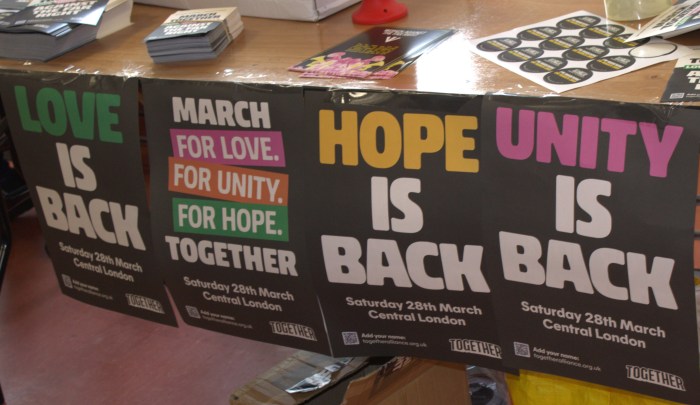
- Build active solidarity against racism and defend refugees and migrants by organising within the UK’s anti-racist and anti-fascist movement and actively mobilising for the Together Alliance protest on 28 March.
- Link the struggle in Sudan with the Palestine solidarity movement and wider anti-racist, anti-imperialist, climate justice, and workers’ movements through conferences, demonstrations, and passing motions at union branches and workplaces on Sudan’s situation.
- Trade unions to share this Conference Statement and Demands with their members, publish it through their websites and social media channels.
- Join with MENA Solidarity in taking action by submitting a public copy to the UK government.
As MENA Solidarity and conference participants, we will continue to stand with Sudan’s revolutionary forces and remain organised against the systems that profit from war, displacement, and human suffering.
Download the full PDF of the Statement and Demands to read and share.
Attendees in person and online voted, endorsing the statement. Following the vote, delegates committed to advancing its demands through union branches, public campaigns, demonstrations and policy advocacy.
6. Next Steps and Action Points
The conference concluded with a clear set of next steps:
- Mobilise for the Together Alliance Protest on 28 March 2026 — building a mass anti‑war demonstration that centres Sudan alongside global struggles against war and racism.
- Distribute the Statement and Demands across union structures, workplaces, community groups and online networks.
- Organise Sudan‑focused meetings and events within unions and community organisations to deepen understanding, develop campaigns, and pass solidarity motions.
- Engage with policy and elected representatives to advocate against arms sales, discriminatory refugee policies and international complicity in Sudan’s war.
- Coordinate ongoing solidarity work linking Sudan with Palestine and other struggles against imperialism, racism and militarism.
The conference closed, thanking the speakers, organisers, cultural performers and all attendees whose participation strengthened the collective commitment to justice, peace and international solidarity.
7. Acknowledgements and Thanks
MENA Solidarity thanks everyone who donated and contributed to our conference. We are grateful to all the speakers for sharing their insights, experience, and commitment, and to the facilitators, volunteers, and technical team whose hard work made the conference possible. We also thank Sudanese activists and community members in the diaspora, whose tireless organising continues to fight for justice, accountability, and democratic civilian rule in Sudan.
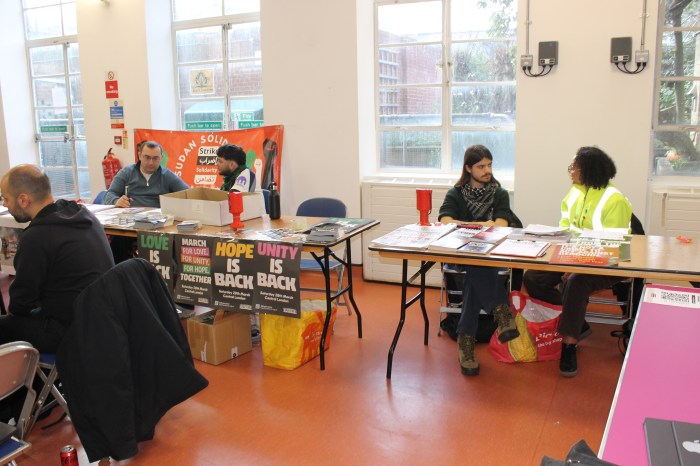
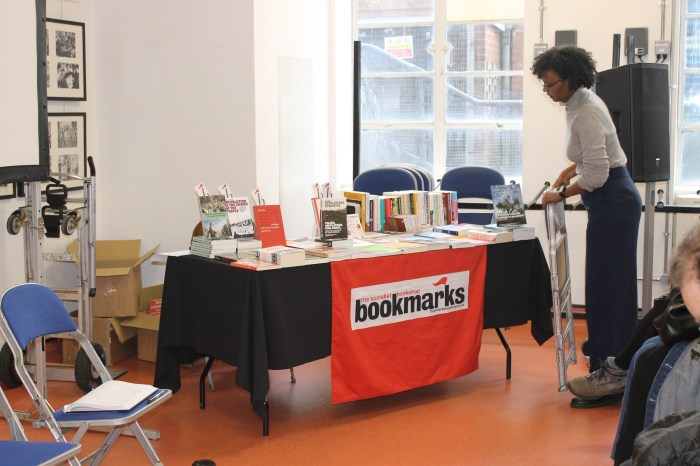
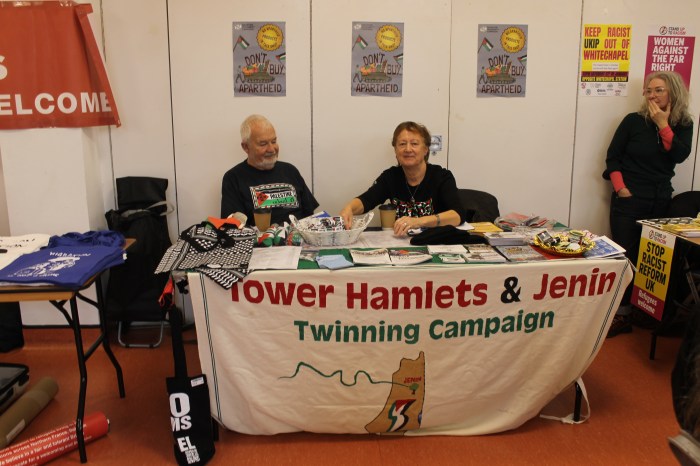
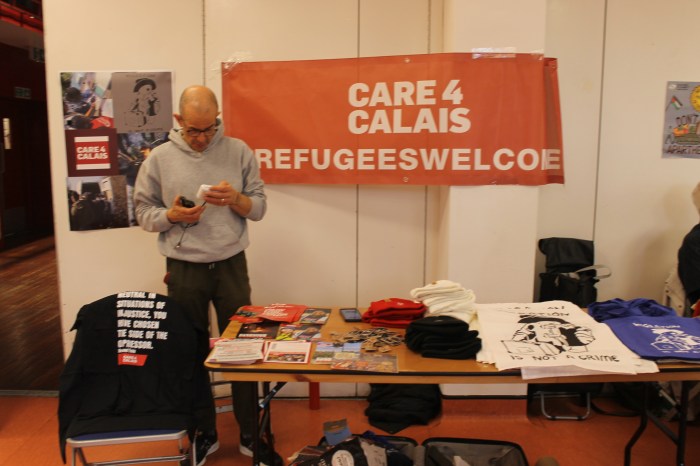
We are particularly grateful to the trade unions and councils, campaigns, and organisations that supported the conference, mobilised their members, and helped amplify the call to end the war, hold those responsible to account, and secure democratic civilian rule. Thanks also to the organisations that hosted stalls, shared materials and ways to get involved. Our thanks also go to the cultural contributors and musicians whose performances reminded us of the power of culture, memory, and resistance, creating a space of solidarity, reflection, and shared humanity.
Finally, we thank everyone who attended, both in person and online, and who engaged in discussion and the collective endorsement of the Statement and Demands. The unanimous vote reflected not only agreement on the text, but a shared commitment to turn solidarity into action in the months ahead.
Thanks to photographers Maab and @aaprp_britain for capturing the spirit and energy of the conference.
We look forward to continuing this work together in solidarity with the people of Sudan.
| Supported by the national unions of the National Education Union (NEU), Public and Commercial Services Union (PCS), University and College Union (UCU), and Equity; Hampshire County Association of Trades Union Councils; Unite the Union WM6070; Portsmouth Trades Council; Sudanese Women’s Union (UK & Ireland); United Tech & Allied Workers (UTAW); Stand Up To Racism (SUTR); Unite the Union SE6240; Sudanese Doctors Union – UK; Doctors in Unite; Greater Manchester Mental Health UNISON Branch; Southampton Trades Union Council; Sudanese Journalists Forum – UK; Portsmouth City UNISON; Unite Community Portsmouth and District Branch; Sudanese Lawyers Democratic Front; and the Campaign Against Arms Trade (CAAT); Transport Salaried Staffs Association (TSSA) union; Sudanese Women for Peace; Stop the War Coalition (StWC). |
Take action:
- Share this Statement and Demands widely across your networks, workplaces, unions, and community organisations.
- Order materials for the Together Alliance protest on 28 March from here, and help mobilise your workplace, union branch, and community.
- Share this motion with your union branch and advocate for its adoption: Model Motion – Stand with Sudan: Stop the War, Support the People
- Access our Stop the War in Sudan toolkit and sign the postcard addressed to Prime Minister Keir Starmer, urging the British government to support the Sudanese people.
- Read our analysis, “The Illusion of Choice: Why People Should Reject Both Sides of the War in Sudan”, for essential background on the warring factions and the revolutionary alternative.
- Download / order our newly released “Sudan’s Revolutionary and Popular Movements: a research report”.
- Book your ticket for the new film “Sudan, remember us” at a screening near you.
Download resources:
- Sudan Update July 2025 – download the leaflet >>here
- ‘Sudan’s Militia War on the People’ Sudan Update April 2025 – download the leaflet >>here
- ‘Reject both sides in Sudan’s war’ Sudan Update February 2025 – download the leaflet >>here
- ‘Famine is the new war’ Sudan Update September 2024 – download the leaflet >>here
- ‘Stopping Sudan’s hidden war’ Sudan Update March 2024 – download the leaflet >>here
- ‘Why is there a war in Sudan?’ Sudan Update May 2023 – download the leaflet >>here
- ‘Stop the war in Sudan’ Sudan Update April 2023 – download the leaflet >>here
- Stop the war in Sudan / Refugees welcome A4 poster – download >>here
 MENA Solidarity Network
Pingback: Invitation: Holocaust Memorial Day 2026 — The Darfur Genocide and the Ongoing War in Sudan | MENA Solidarity Network