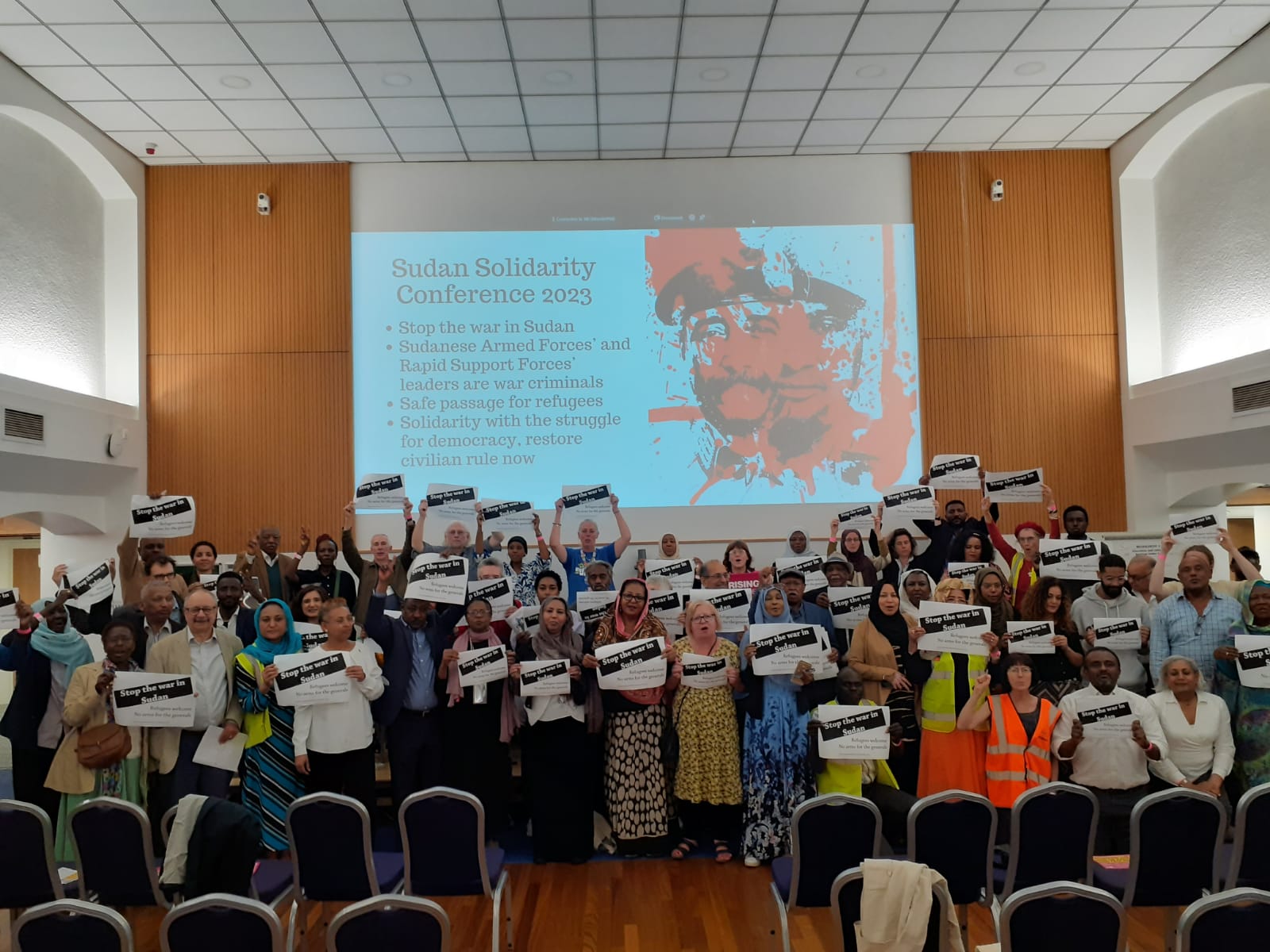
Hamilton House, Mabledon Place, London – Saturday, 30 September, 2023
Uniting for Freedom, Peace and Justice for all
In London on Saturday, September 30, 2023, the National Education Union headquarters at Hamilton House hosted the Sudan Solidarity Conference 2023. Organised by the Middle East and North Africa Solidarity Network (MENA Solidarity) and British and Sudanese unions and organisations in a display of unity and support for the Sudanese people. Notably, this marks the third Sudan Solidarity Conference organised by MENA Solidarity and proved to be the largest to date.
Link to Sudan Solidarity Conference 2022
Opening Plenary: The war in Sudan and its international context
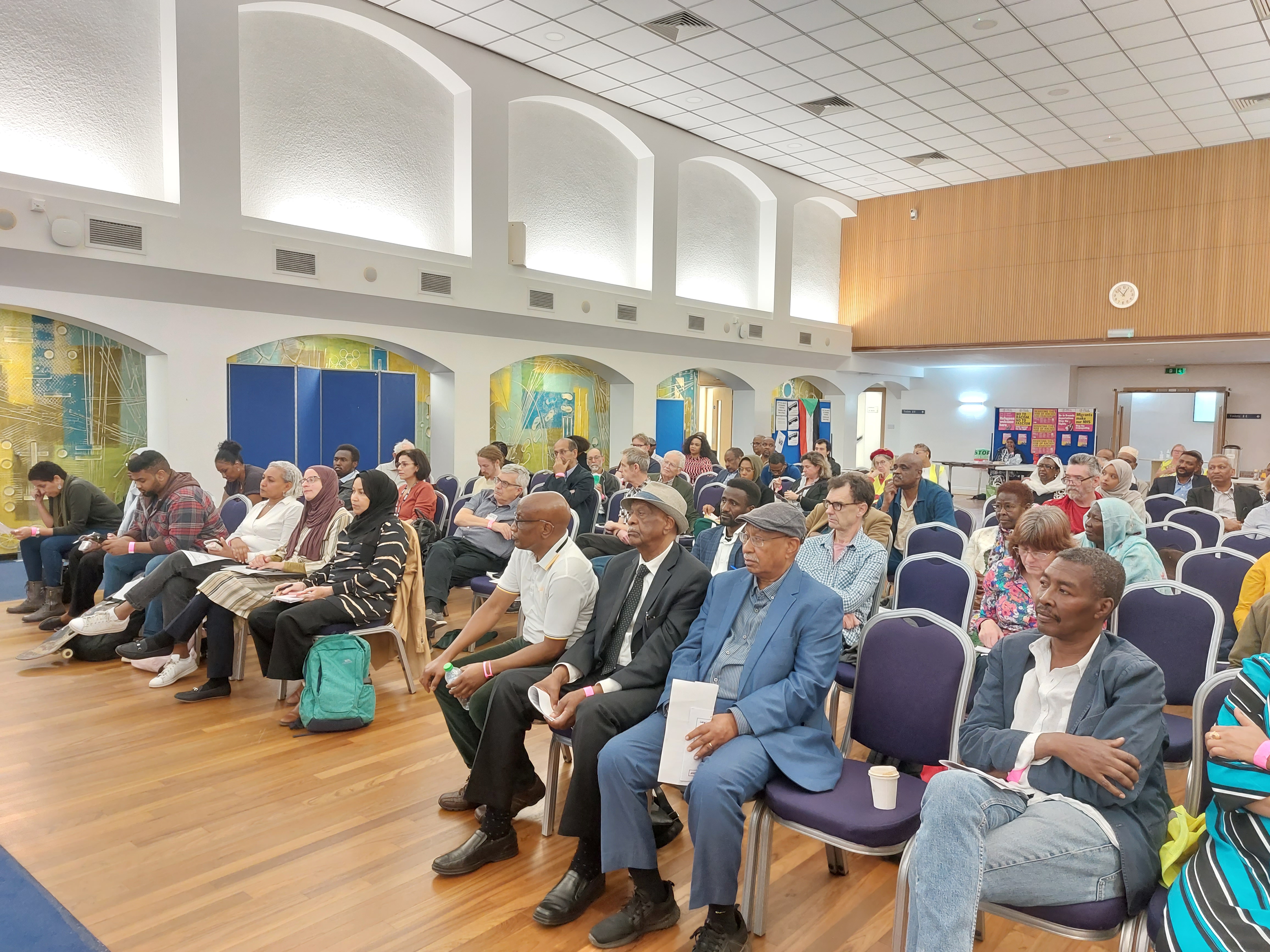
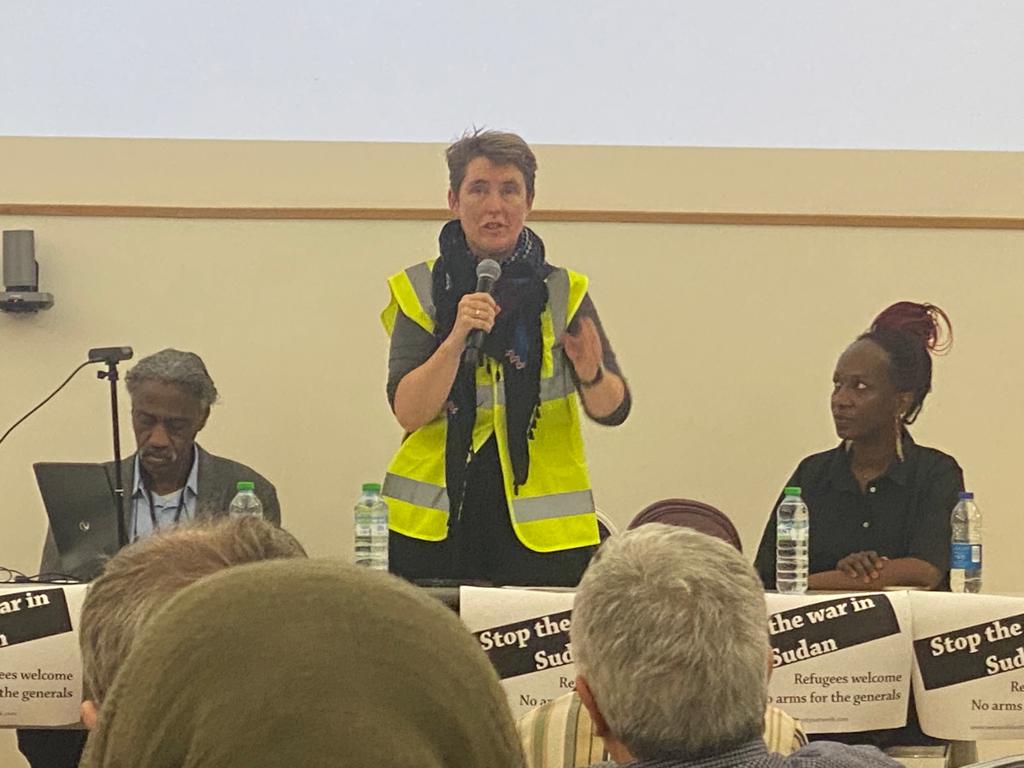
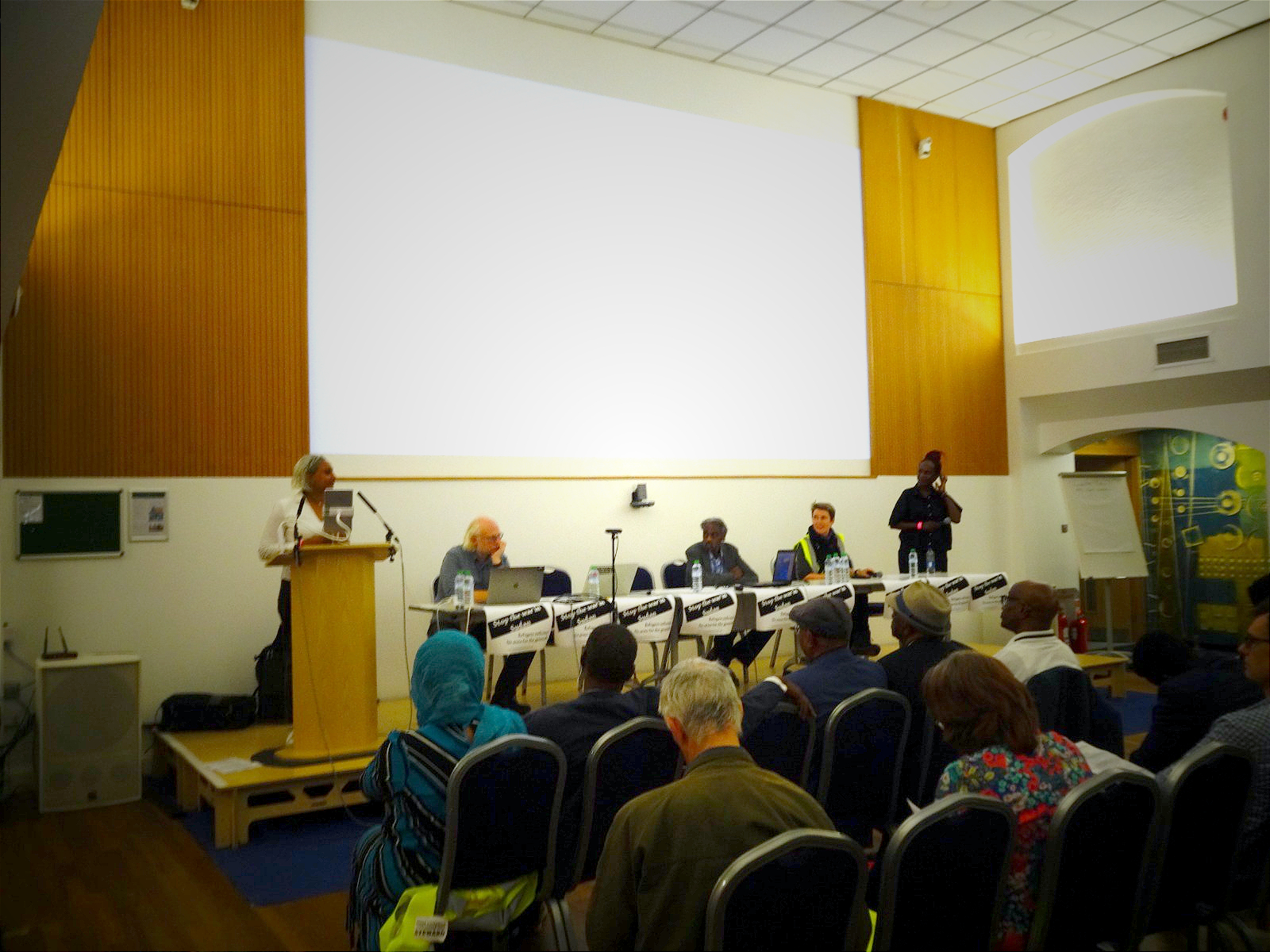
Against the backdrop of the conflict’s eruption in April 2023, following a military coup in October 2021 and a protracted struggle for democracy since 2018, the plenary explored the roles played by external powers, including the British government, in shaping the crisis.
Anne Alexander, co-editor of Middle East Solidarity magazine and a member of the UCU (University and College Union), opened the conference by stating:
“It’s very important that we are here and we are making a clear statement that we stand against war in Sudan, against racism, in solidarity with refugees and migrants and for workers’ rights and social justice. The space to express that perspective inside Sudan is under siege. It has been attacked by both, the Sudanese Armed Forces and the Rapid Support Forces militia, both of which we utterly oppose and this conference is directed at exposing their crimes.
What we saw in April this year was that these two armed parts of the Sudanese state declared war, not on each other, but on the Sudanese people. And when the state declares war on the people, we as trade unionists and activists need to stand with the people when they resist.”
Alaa Gilgal, General Secretary of the Sudanese Engineers Union in UK & Ireland, delivered an account of the Sudanese engineers’ pivotal role amidst the conflict, highlighting the perils they encounter from both warring factions, and explained the engineers’ strategies for post-war reconstruction.
“The engineers can do a lot. That is why we are here today, because we need to help the Sudanese people” he said.
“We have a big role, during the war and for the short term, medium term and long term. Even in the long term after the war, we are going to restore this country back, we are going to rebuild Sudan”.
Louise Regan, representing the NEU National Executive, extended a warm welcome and conveyed her union’s steadfast support and solidarity for the Sudanese people and refugees. “Our job as trade unionists is to stand with all people facing oppression globally,” she said, “the situation in Sudan right now is particularly distressing and that’s why it is a priority for us.”
Rania Amin, on behalf of the Sudan Uprising Support Group, said: “Many of those displaced were reliant on daily income-based jobs and have now lost their livelihoods, leaving them with no means to support themselves and their families. This puts people in a vulnerable position and subject them to exploitation.”
“Those targeted by militias and armed forces face the constant threat of violence, including sexual and gender-based violence. The number of girls subjected to rape and sexual violence since the start of fighting has reached about 136 cases which is expected to be more due to under-reporting. According to survivors, most violations were committed by RSF members, except for only two cases that armed looting groups committed. Activists including members of various unions, are being arrested and tortured by both parties. At least 52 new detention centres have been established in Khartoum state alone since the war erupted, according to a recent report by the pro-democracy Sudanese Emergency Lawyers. Of all these facilities, 44 are controlled by the RSF and the remaining eight by the army.”
Alsadiq Ali Hassan, the Director of the Sudan Institute for Democracy and Acting Chairman of the Board of Trustees of the Darfur Bar Association sent a detailed written report to the conference about the devastating impact of the war on the Darfur region, which was read out by Khalid Sidahmed.
He said “Darfur has become fertile ground for intertribal conflicts. The Rapid Support Forces have been able to impose their control over West Darfur state, seize important garrisons and areas in Central Darfur and North Darfur, and are now threatening Nyala, the most economically important city in Darfur and its first commercial centre. The armed movements that have joined the government under the Juba peace agreement have failed to demonstrate their political capabilities to achieve stability in the region under their control, or to demonstrate their military capabilities to maintain security and safety in the region with its five states.
If the ongoing war between the two sides does not stop, Darfur will be a window for civil conflicts to all parts of Sudan. In the absence of the role of official bodies, the gun is no longer the exclusive right of the state, and the state no longer monopolises the means of violence. The Sudanese model will be the most serious in Africa and a threat to international peace and security.”.
Othaylat Suliman, Chairperson of the Sudanese Journalists Forum – UK spoke about the perils of fake media, the pivotal role of journalism during revolutions, and the relentless targeting of journalists by warring factions. “What we are seeing is a polarisation of views across Sudanese society, and journalists, although they feel they should be independent, are often under pressure to take sides. Pacifists who oppose the war are being branded as RSF supporters by pro-army sources, and alongside this we see a slick campaign by PR companies which is promoting the views of the RSF. We have been supporting the Sudanese Journalists Syndicate, which is having its own battle to establish itself against the government-approved journalists’ union. Many people are unaware of these efforts to establish a platform for independent journalists.”
John McDonnell, MP, conveyed a message of solidarity and support, which was delivered by Anne Alexander.
Workshops
Following the opening plenary, participants engaged in three workshops, each focusing on a crucial aspect of the Sudanese crisis:
1. Health services on the frontline
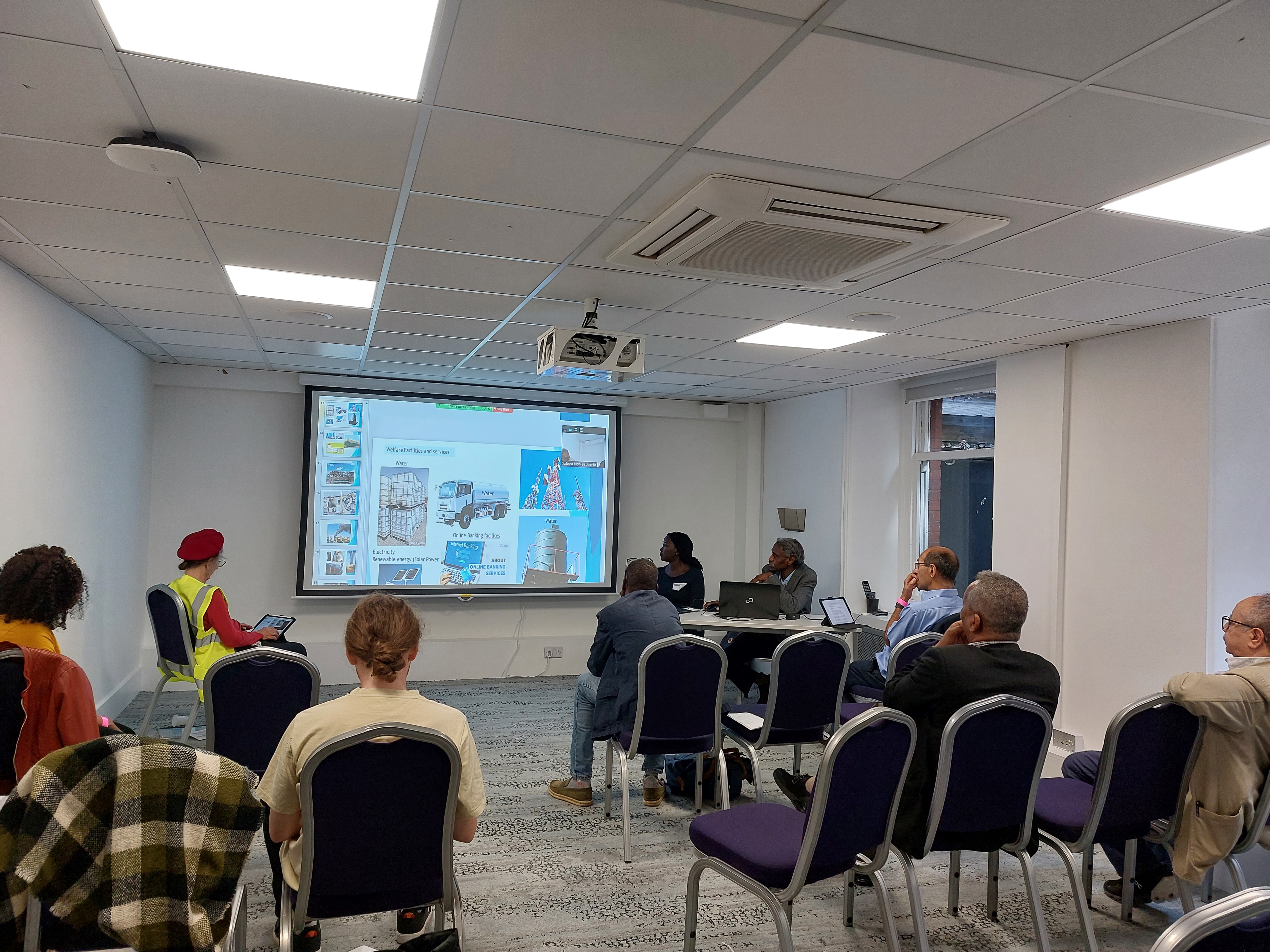
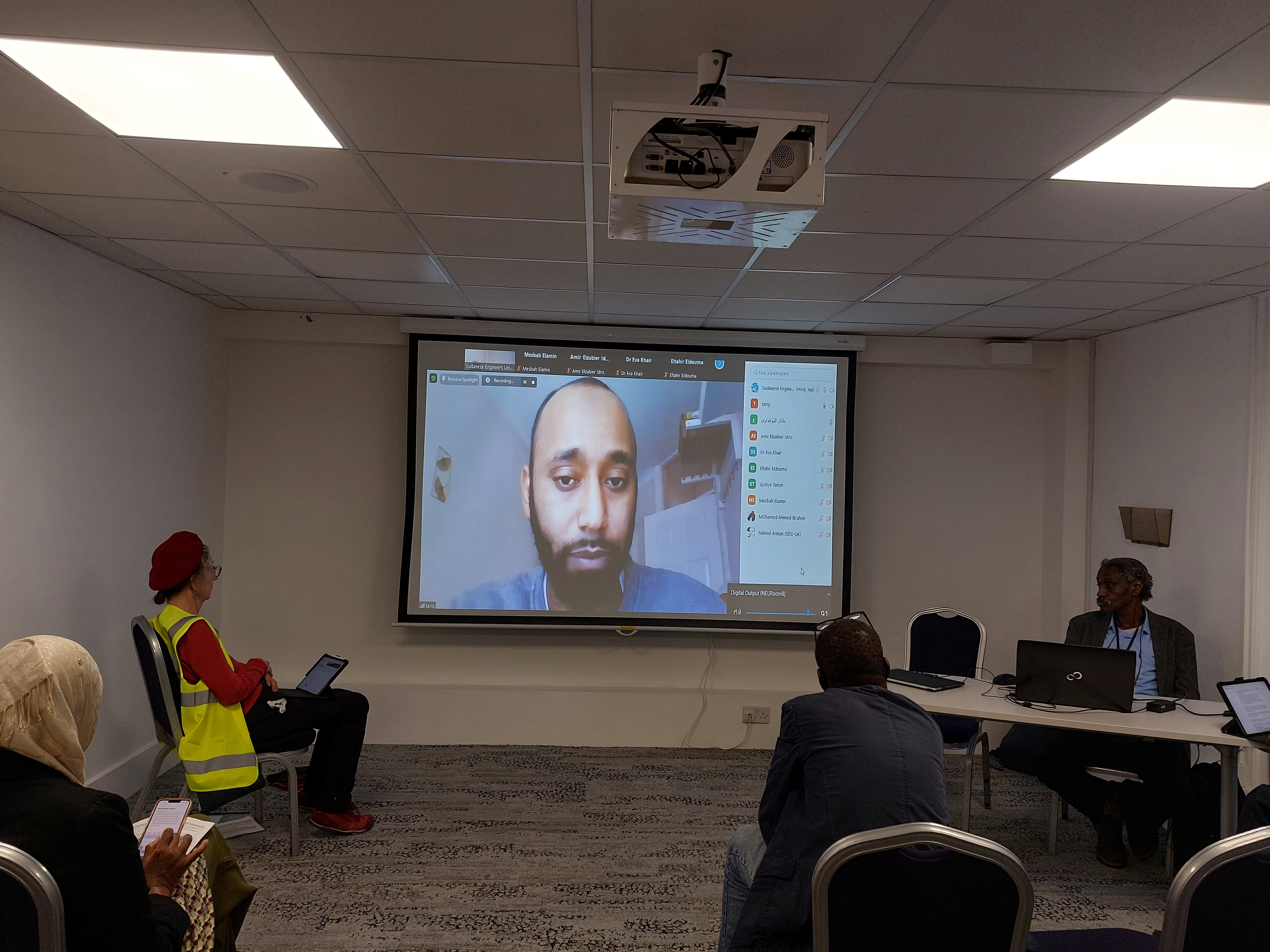
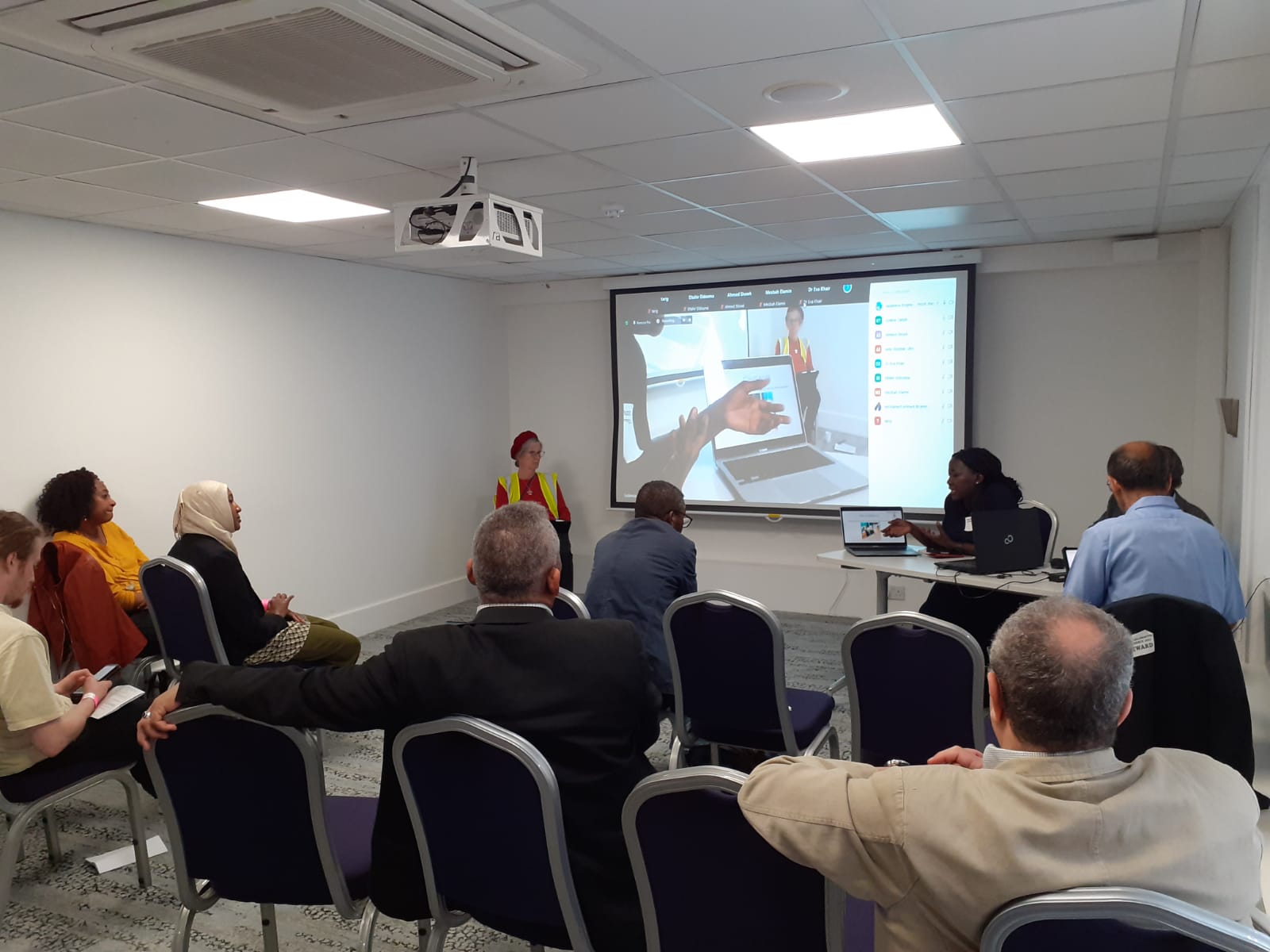
This workshop delved deeply into the pivotal roles undertaken by healthcare professionals and engineers in sustaining a healthcare system and the overall infrastructure amidst the ongoing challenges.
Dr. Sarah Richard, Academic Secretary of the Sudan Doctors Union UK highlighted the harrowing destruction of health facilities, which have become targets for both warring factions. Dr. Richard emphasised the urgent need for essential medical supplies, including oxygen, and funds to rescue financially drained hospitals. Additionally, Dr. Richard brought attention to issues such as the Al Geneina region massacre and the grave concern of sexual violence in the region.
Donations to the Sudanese Doctors Union could be paid via this link.
Alaa Gilgal, General Secretary of the Sudanese Engineers Union in UK & Ireland, presented a detailed examination of the establishment of Emergency and Crisis Rooms following the onset of the war. These rooms were established with a primary objective of halting the conflict. Alaa elaborated on the extensive destruction inflicted on infrastructure and underscored the significance of these emergency rooms in providing essential services and coverage. He further discussed the requirements for water, electricity, communication infrastructure, and the implementation of online banking systems. The discussion also addressed the dire situation of displaced individuals fleeing the conflict, both within Chad and across the borders into neighbouring countries.
Engineer Tarig Ahmed introduced a groundbreaking proposal centred on a project providing solar panels to hospitals which can no longer access reliable power from the war-damaged electricity grid.
Donations to the Sudanese Engineers Union could be paid to:
Account Number: 67220968 / Sort Code: 309950 / Reference: Solar
Throughout the workshop, the conversations revolved around the potential synergy between these initiatives and the grassroots efforts of resistance committees and trade unions, which maintain a presence across the country. Establishing a meaningful connection between trade unions in the UK and their counterparts in Sudan emerged as a key goal.
2. Safe passage now – Refugees and migrants welcome
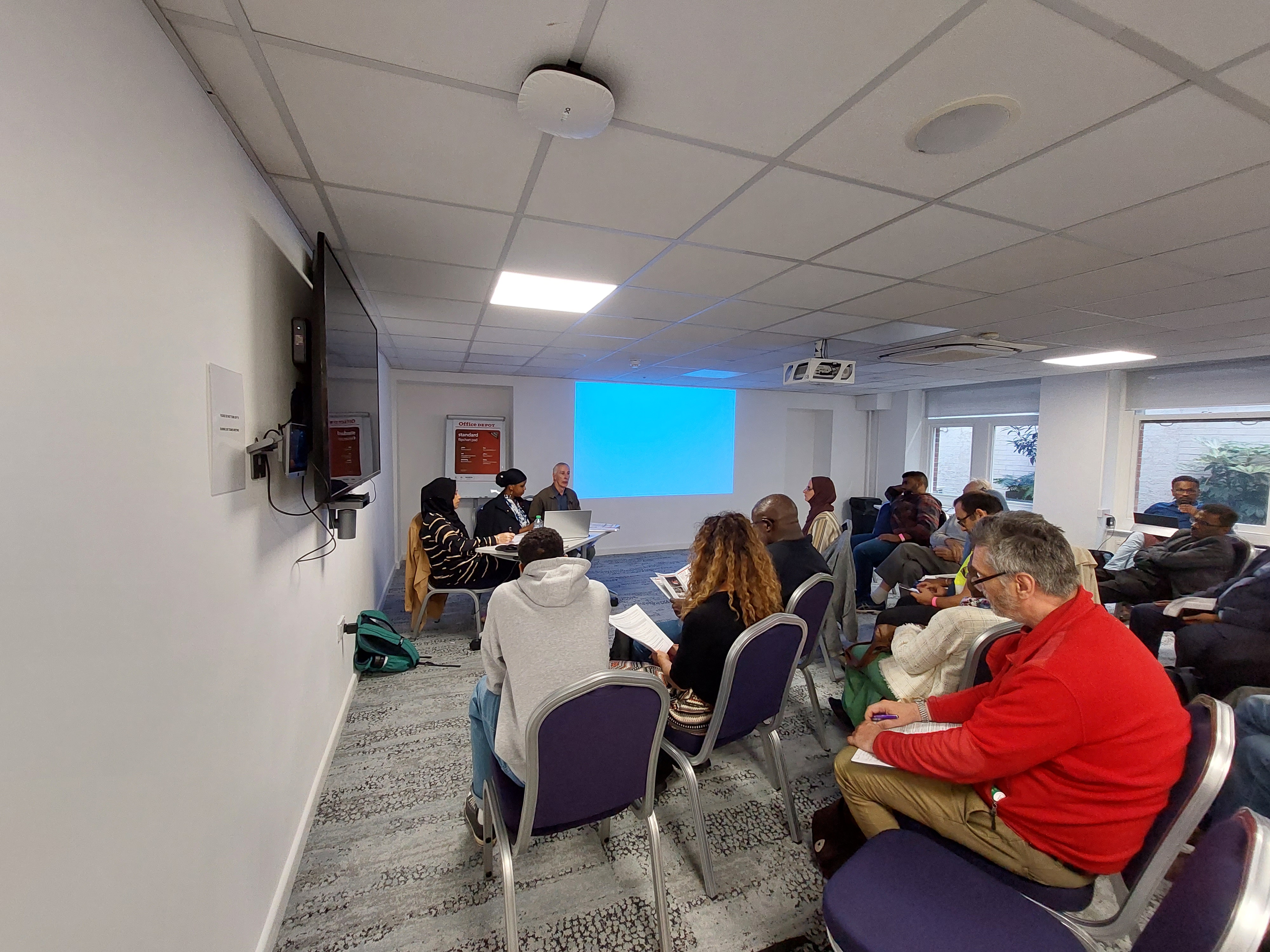
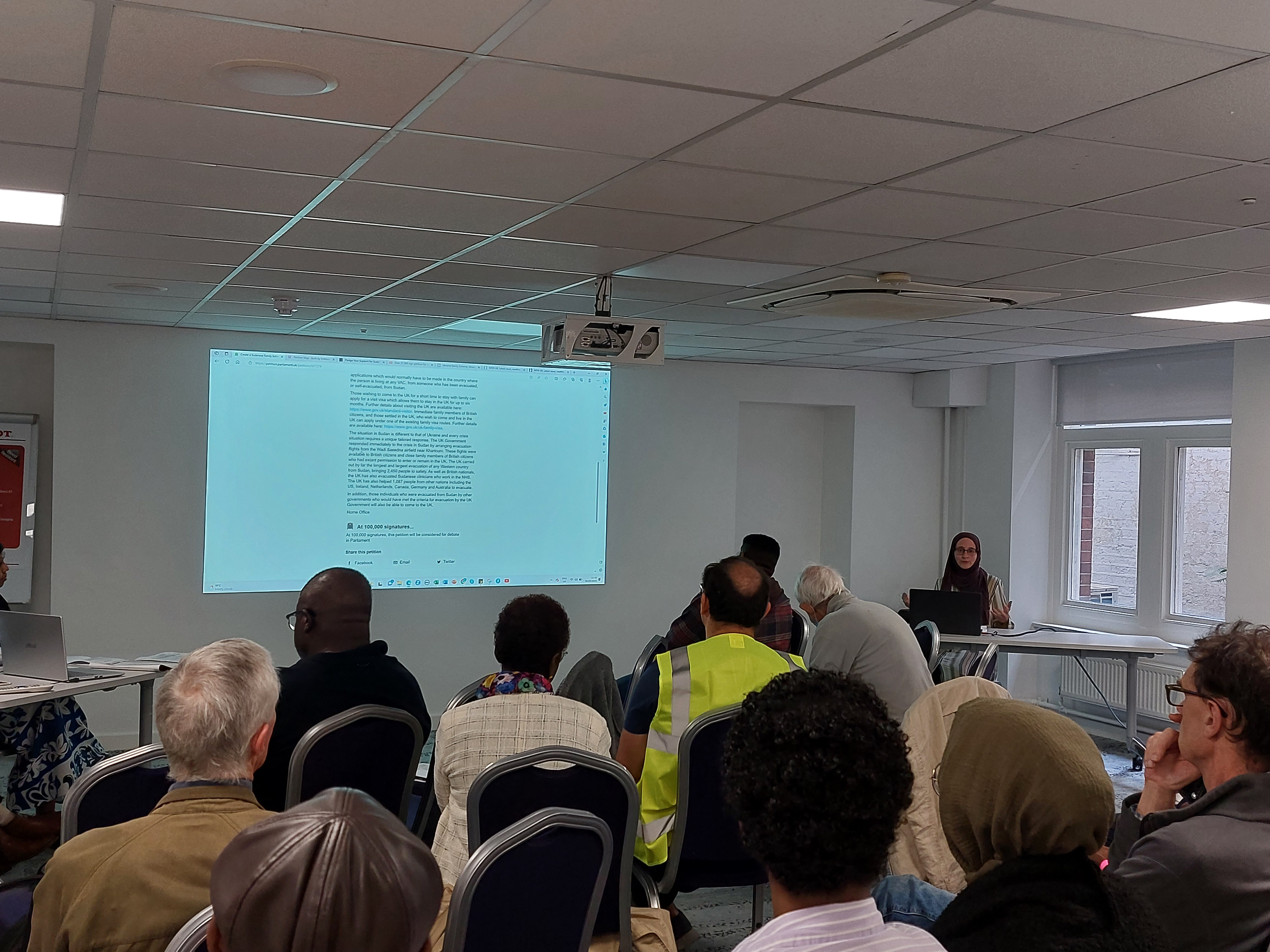
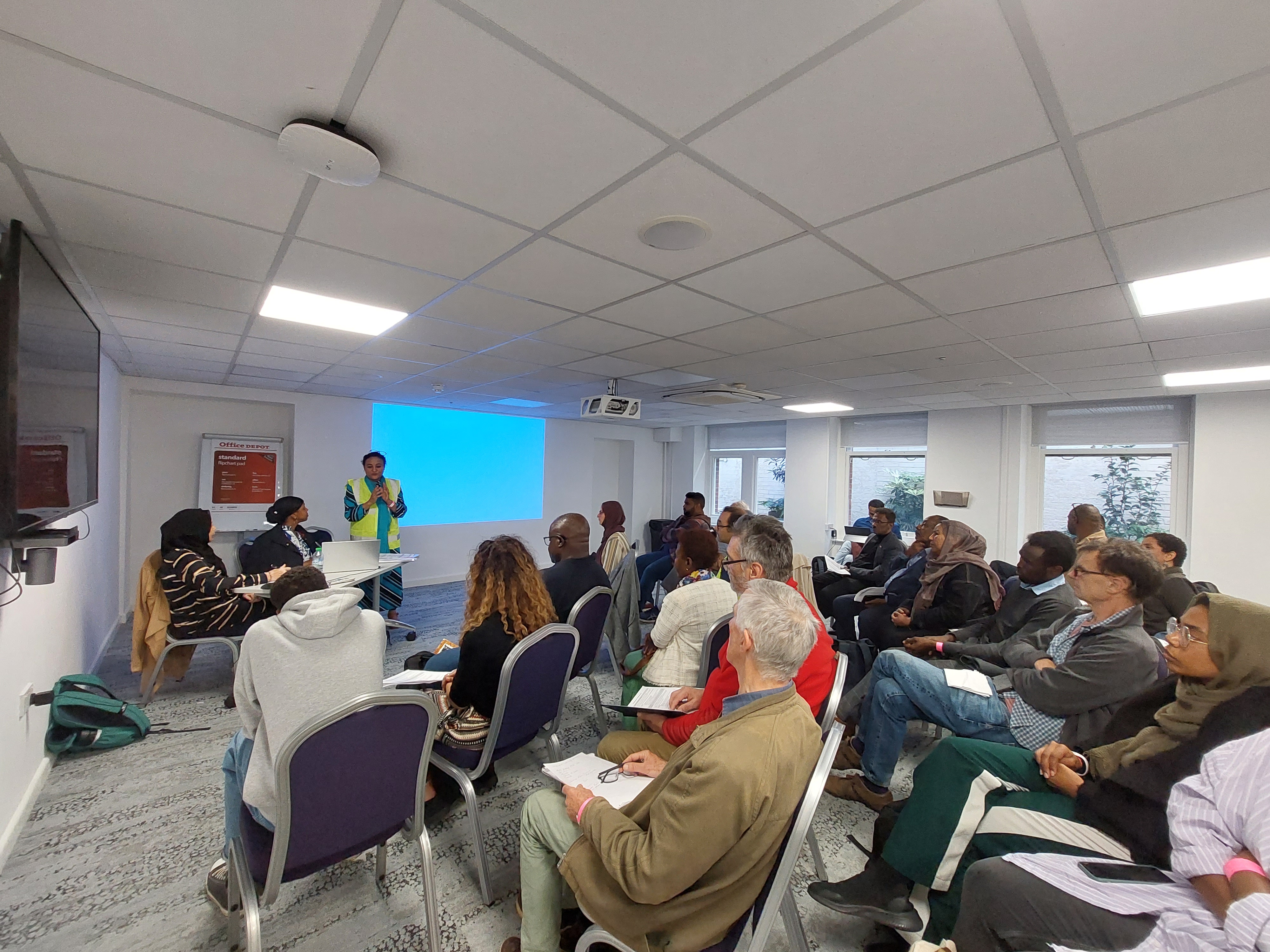
This workshop addressed the need for safe and lawful routes for individuals escaping the war in Sudan, encompassing both refugees and those in search of temporary sanctuary. Speakers and participants discussed building widespread backing for a parliamentary petition advocating for the establishment of a Family Visa Scheme tailored to Sudan’s unique circumstances.
Hector Wesley, member of the PCS (Public and Commercial Services Union) National Executive Committee, delivered a scathing critique of the British government’s immigration policies. “I am very proud that the PCS did take the government to court over the plan to send refugees to Rwanda and work alongside others like Care4Calais to challenge government policy. This is a political issue and the way we are going to win it, we are going to have to win the hearts and minds of the public.”. Hector warned that the government hoped to distract from its own failure to fund public services by ramping up anti-immigration rhetoric, “It’s clear that immigration is one of the battlegrounds the next election is going to be fought on and what the government will say is that the country can’t handle people coming because public services are under strain and part of the reason that they are under strain is because of immigration”.
“The PCS is backing the call for a Family Visa Scheme for Sudan”, he added. “I am quite proud that my union alongside other unions have been very clear and we said if we can have the scheme that was put for Ukraine we can put a similar scheme in respect of Sudan. People can say why Sudan should be of interest to the UK, but if we look at the history, the UK has had a lot of historical interests in Sudan”.
Veronika Adam Svarcova, a dedicated advocate for refugees and the initiator of the “Create a Sudanese Family Scheme Visa for Sudanese People Affected by War” petition, shared insights into the origins and significance of the petition. To date, the petition has garnered the support of nearly 29,000 signatories. Veronika articulated the reasons drove her to create this crucial petition and passionately encouraged the audience to not only endorse it but also actively disseminate it among their respective networks.
“Nobody knows that Sudan was hosting millions of refugees from other parts of Africa”, she said.
“The UK thinks the refugees only come to the UK. No, we have countries that have a much bigger percentage of refugees, and they are managing it. This is the rhetoric they use about Calais”, she added.
She asked the audience to spread awareness about hospitality in the local community, so that we can reach a large audience, contact local authorities, and speak to people.
“I would encourage everyone to start with the local authorities and this conference is an example of how to come together and brainstorm and unite in the message. There are so many messages here. There is a welcoming atmosphere here for everyone”.
Wafaa Salim, President of the University of Khartoum Alumni Association – UK and Ireland, used her platform to strongly criticise the responses of both the British government and the United Nations to the Sudanese war and the ongoing refugee crisis. “The UK government should not ask people fleeing war in Sudan to apply for a UK visa through the normal route. This is not a normal situation, it is an emergency and it needs to be addressed as an emergency,” she said. “We feel helpless because we are not able to do anything for our families who are under bombing, siege and shelling every day.”
She underscored the dire need for secure passage for Sudanese refugees and emphasised the urgent requirements for essential provisions, including food and medical aid for Sudanese individuals stranded along the borders with neighbouring countries, and across Sudan. There is no presence of UN agencies in many areas of Sudan and donations are not reaching those who need it because the SAF and RSF control the port, she stressed. “Those who flee Sudan to neighbouring countries should be given refugee status and help to access essential services in those countries. The issue of safe passage needs to address this question, there have to be ways to get food and supplies to people in urgent need inside and outside Sudan.”
3. Education and cultural heritage under fire
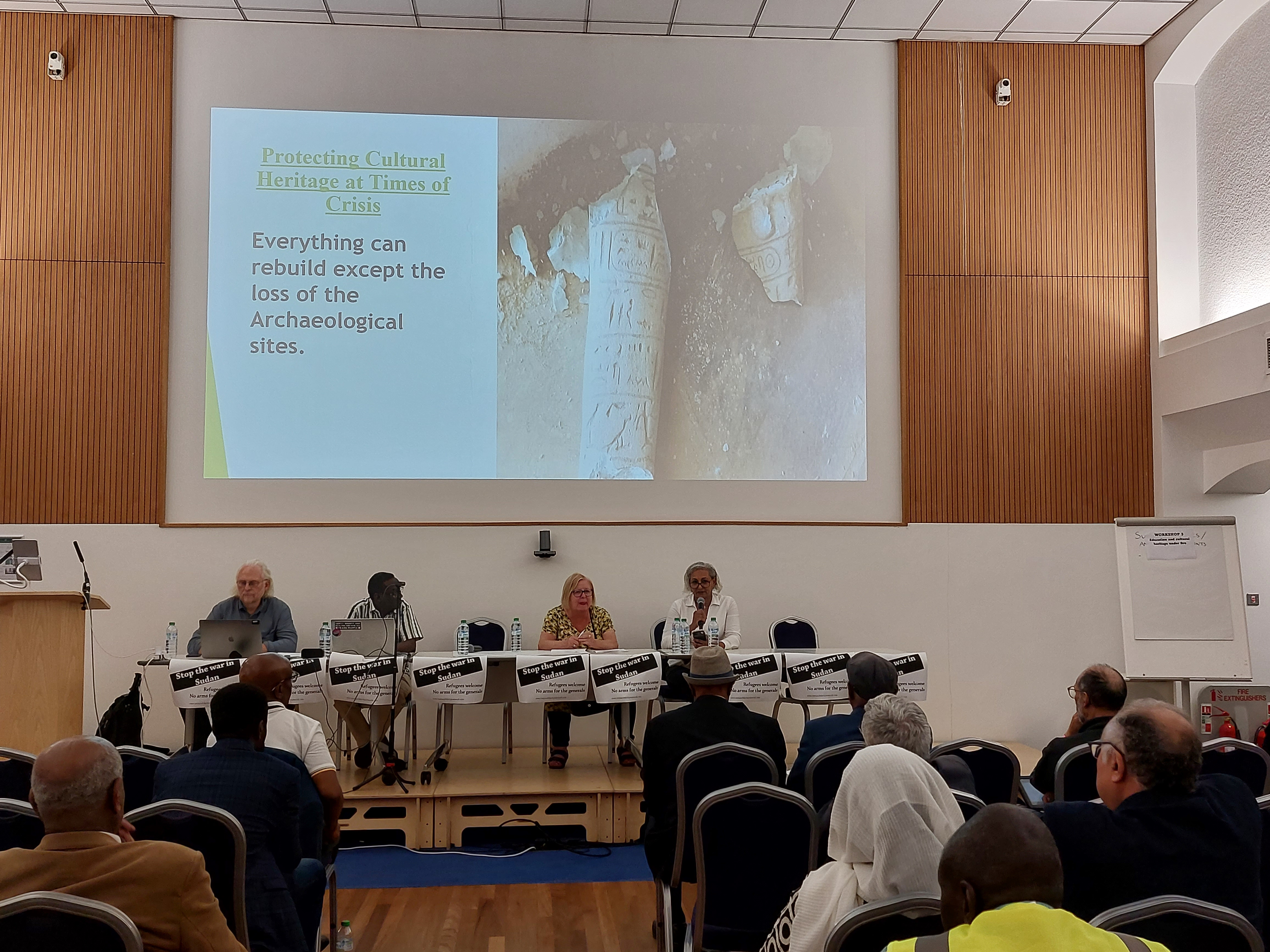
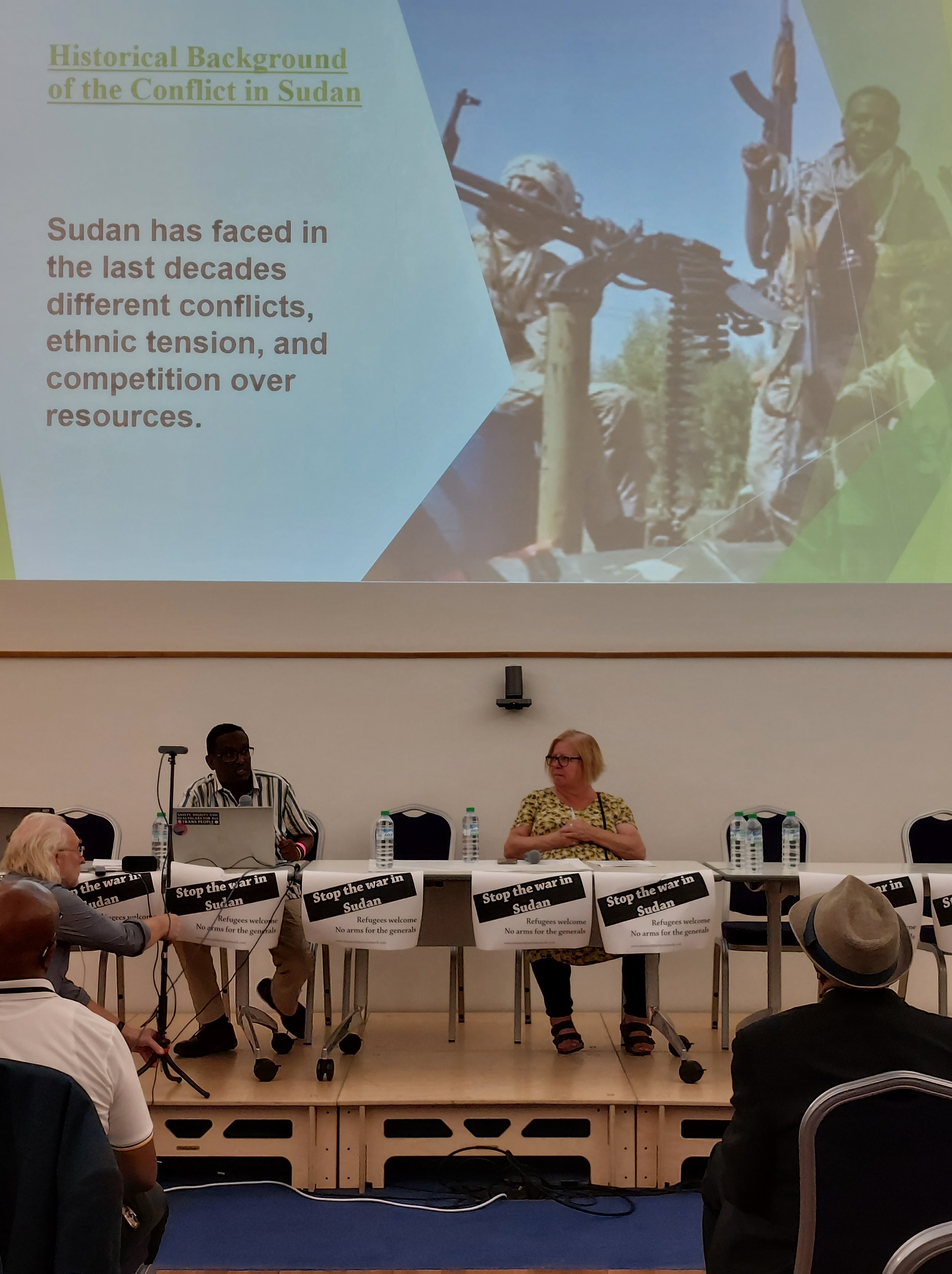
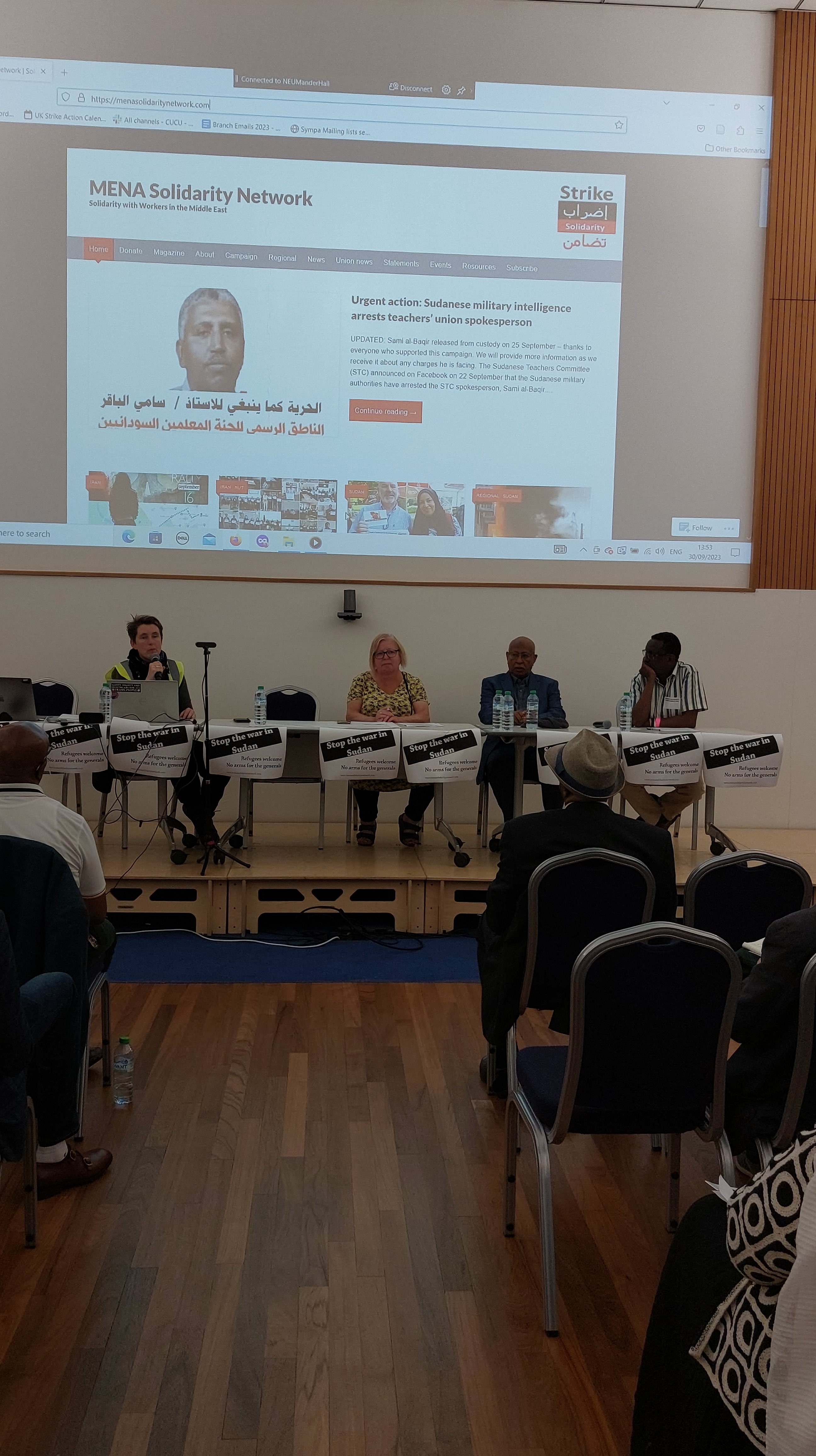
This workshop explored the war’s far-reaching consequences on education, spanning both universities and schools, and the grievous implications for cultural heritage institutions. During the session, educators and dedicated workers in the cultural heritage sector offered their invaluable insights and experiences.
Dr. Abdel Mutaal Girshab, formerly serving as the Dean of Student Affairs at the University of Gezira, delivered an enlightening and thought-provoking speech. His address touched upon the challenges facing educational institutions, particularly universities and schools, during these war times:
“A total of more than 100 public and private higher education institutions in Sudan, as well as research centres and the National Fund for Student Welfare have been damaged and looted since the outbreak of armed conflict between the Sudanese Armed Forces (SAF) and the paramilitary Rapid Support Forces (RSF) on 15 April 2023″. This is not collateral damage, Dr Girshab explained, but deliberate and targeted shelling and looting of educational institutes.
He proposed expanding access to eLearning platforms and cooperation between universities to give the students more opportunities to continue their education at other universities when there is conflict in their own state. Dr Girshab also called for support and solidarity from Higher Education institutions in Britain and internationally
Sami Albagir, spokesperson for the Sudanese Teachers Committee, offered a comprehensive overview of the numerous challenges that schools and teachers confront in the current landscape. He presented his insights via a recorded message:
“The education sector has also suffered significant damage. It employs more than 300,000 staff members who have had their salaries withheld since the start of the war on April 15th for a period of no less than five months. We are now entering the sixth month without salaries. This situation has prompted the Teachers Committee to take action to demand these rights. Memorandums have been submitted to state governors, the federal government, and international labour organisations. This opposition has had a significant impact on the decision to withhold salaries, with salaries gradually resuming in some states. We hope that these issues will lead to the restoration of salaries for education workers. Activist teachers who demand their rights and call for an end to the war have also been targeted by arbitrary arrests by both parties, whether it be the Sudanese army or Rapid Support Forces.
We call upon unions worldwide and the British unions to stand in solidarity with this urgent issue and raise their voices loudly about the need to stop this war that violates human rights, including those of teachers and education workers”.
Sami Albagir was arrested soon after making his video but national and international protests helped bring about his release. See our response here.
Dr. Ismail Hamid, representing the Sudan Heritage Protection Initiative, a collaborative endeavour involving academics and members of Sudanese civil society, presented a comprehensive report. This report documents the extensive destruction inflicted upon Sudan’s rich heritage and culture due to the protracted conflict. The complete report, which has previously been published by MENA Solidarity, can be accessed through the following link. Mr. Hamid called for global support to help protect Sudan’s cultural heritage, to offer support and funding for workers in hardship and at risk from the conflicts and for targeted support to protect sites and help train and reskill staff.
Final plenary: Organising against war, building anti-racist solidarity
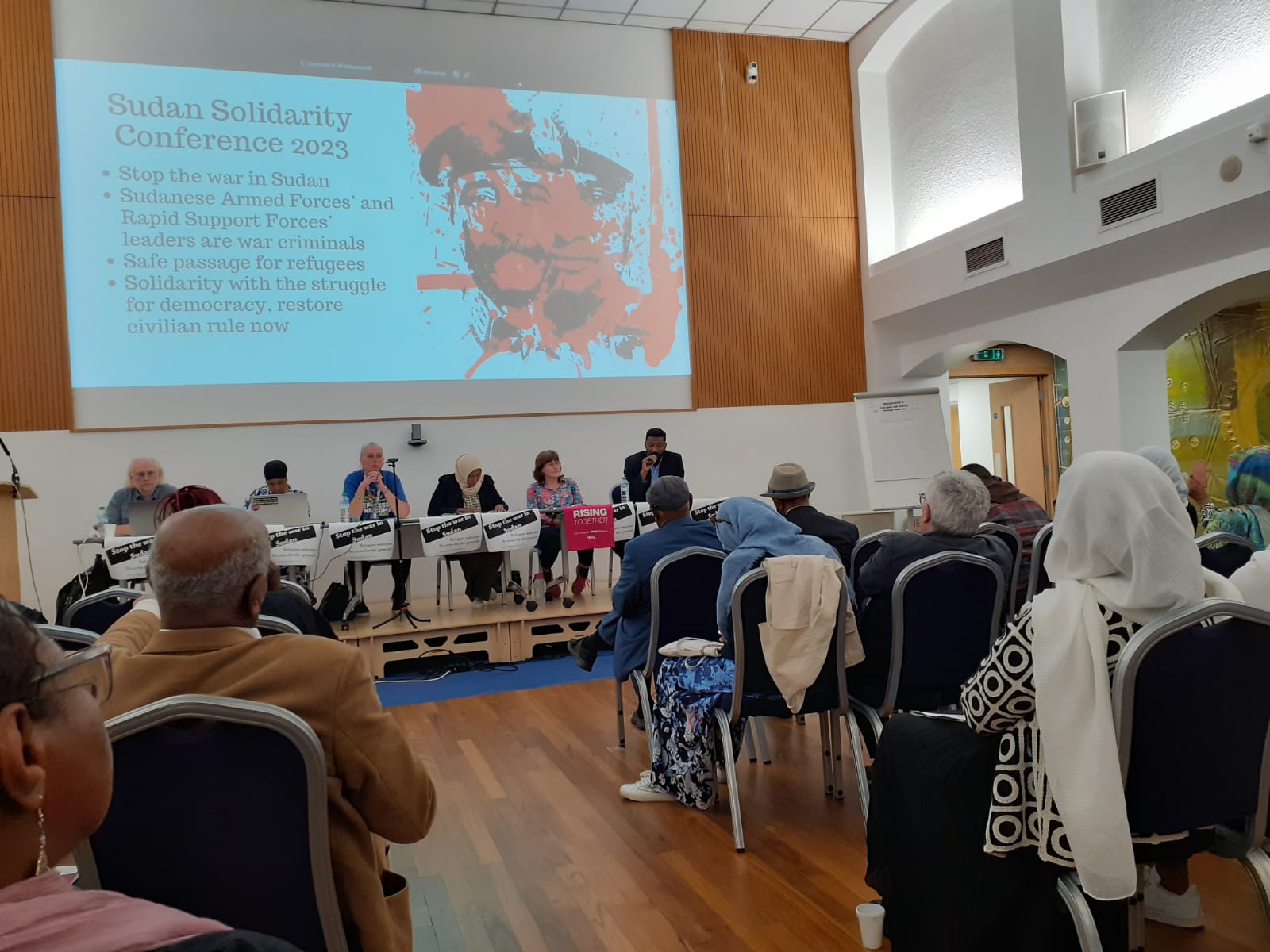
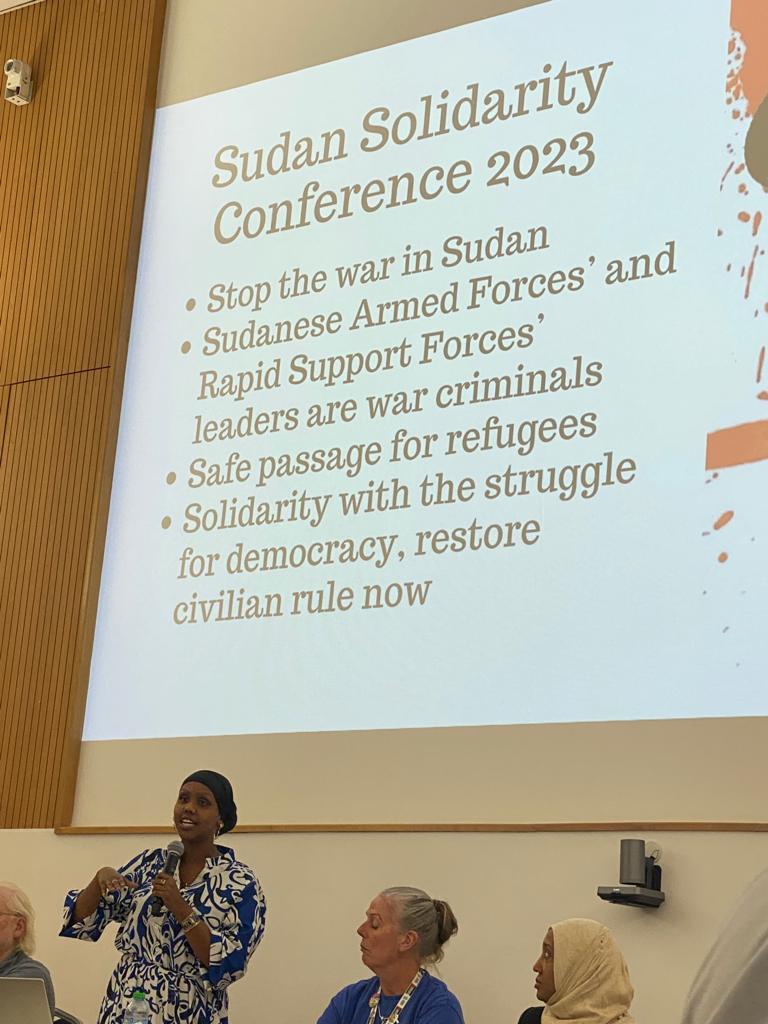
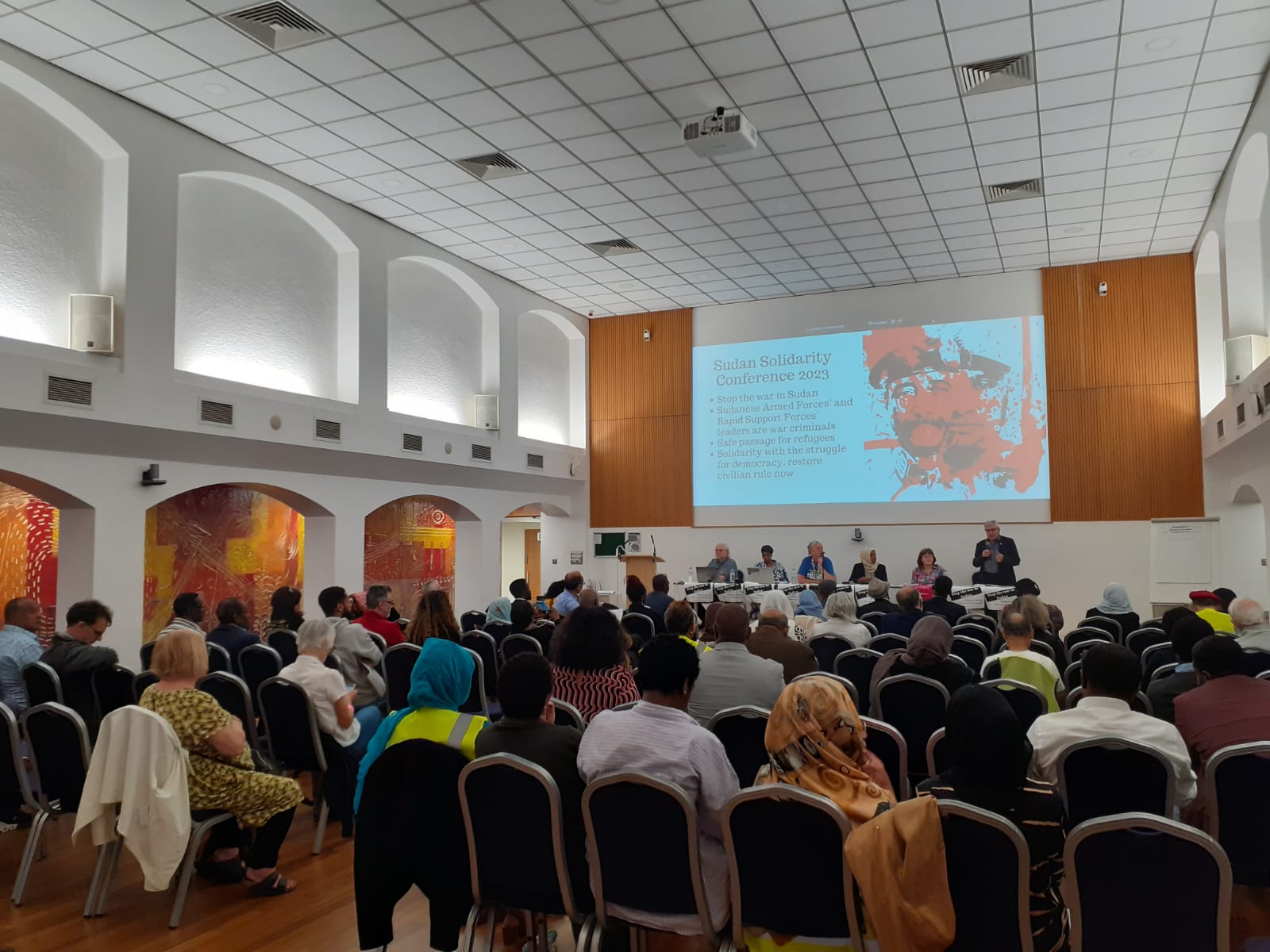
The culmination of the conference was marked by a vibrant final plenary session. This session delved into strategies for mobilising against the ongoing conflict, nurturing bonds of anti-racist solidarity, and strengthening collaboration between Sudanese activists, trade unions, as well as anti-racist and refugee solidarity movements in the United Kingdom. The goal was to construct a more robust solidarity campaign.
Justine Mercer, the national President of UCU told the conference “This is a humanitarian crisis, first and foremost. Over 5 million people have been displaced. That means they don’t have access to clean water, electricity or healthcare or shelter. And whatever your politics, the scale of the humanitarian crisis ought to move everyone. If you have any humanity, you cannot but be affected by the scale of the crisis. University and College Union, UCU, of which I’m president, has a proud history of extending international solidarity to our sister organisations. We’ve provided money, resources and speakers. This is the second time I’ve spoken at such an event.
Our congress passed policy four years ago in support of Sudan, and at that time, in May 2019, we were condemning the attacks on doctors, the closure of schools and universities and the arrest, imprisonment and torture of students, teachers and academics. As many speakers have already said, it is the educated people and the educators who are the most dangerous and the most targeted. We were campaigning then, as we are now, for the release of all the imprisoned demonstrators and organisers. We support a democratic, civilian transitional authority in Sudan.”
Mohaned Elnour, representing the Sudanese Lawyers Democratic Front, commenced his speech with a revolutionary rallying cry. “The imperialist countries are not interested in supporting the Sudanese people but rather marinating their interests”, he said. “That is why they are keen to have a weak regime that is willing to fight by proxy in Yemen, normalise the relationship with Israel, block migrants from coming to Europe, and obey the IMF and the World Bank. A regime could be easily controlled, and nothing would be worse to them than a revolutionary government from the people for the people.”. Mr Elnour added: “In this war, civilians are between the hammer of SAF, which uses air and artillery strikes and the anvil of RSF, who occupied our houses, looting and destroying them and committing genocide, war crimes, crimes against humanity, including rape, sexual slavery and assassination of lawyers.”.
Naima Omar from Stand Up to Racism underscored the alarming resurgence of racism and stressed the need to confront the discriminatory policies of the Tory government. “Our government tries to claim that they don’t have money to welcome refugees, yet they have the funds to give to dictators around the world to stop people crossing their borders and coming here to the UK,” she said. “Now more than ever we have to create an anti-racist movement that says refugees are welcome here. Sometimes that can feel a bit daunting, but the Sudanese revolution really showed the strength of ordinary people, coming back and fighting. It inspired people across the world.”. Naima extended a warm invitation to the audience to actively partake in the forthcoming “Resisting the Rise of Racism and Fascism: Stand Up To Racism” conference, slated for October 21, 2023.
Khalid Sidahmed, representing MENA Solidarity, conveyed his solidarity with the ASLEF strikers who were actively involved in a strike on the same day. He also delved into the intricate dynamics of the Sudanese conflict, shedding light on the international community’s involvement in perpetuating the war in Sudan. Khalid called upon the British government to cease arms sales to Sudan’s neighbouring countries as a crucial step toward ending the conflict. Khalid stressed the significance of showing support by attending picket lines and standing in solidarity with the striking workers. In addition, he issued a call to action for both the British and Sudanese communities residing in the UK to foster stronger and more collaborative relationships.
Rania Obead, from the conference organising team, highlighted the role of women in resisting war and leading the revolution. “Throughout our history, Sudanese women have been at the forefront, including during the revolution. Now they face a terrible situation, but they are still fighting back. I never thought that revolution is just a demo, when you go outside and chant in the streets. No, revolution is a movement which we need to build.”
The Sudan Solidarity Conference 2023 stands as a testament to the power of unity and collective action. By bringing together a diverse array of British and Sudanese unions, organisations, and activists, this ground-breaking conference has not only shed light on the pressing issues faced by the Sudanese people but has also laid the crucial foundation for a united front. The importance of this gathering cannot be overstated, as it signifies a commitment to solidarity, freedom, peace, and justice, transcending borders and boundaries. Through shared insights, impassioned speeches, and a resounding call to action, this conference has sown the seeds of a stronger, more cohesive movement dedicated to realising the goals of the Sudanese revolution and ensuring freedom, peace, and justice for all.
What you can do
- Sign and share the petition for the Sudanese Family Visa scheme
- Book a place for the Stand up to Racism conference on 21 October
- Show your solidarity with the struggle for democracy in Sudan – join the protest on the anniversary of the military coup at Downing Street on 21 October, 2pm
Conference Declaration
This conflict has brought together trade unionists and activists from Sudan and Britain to demand an end to the war which is tearing Sudan apart. We are united in sorrow and anger at the damage done to the lives of millions by the actions of the Sudanese Armed Forces and the Rapid Support Forces. The health and education systems, the country’s fragile infrastructure, and the cultural heritage institutions have been destroyed.
The United States, the European Union, Russia, and the British government have played a significant role in this conflict by arming the United Arab Emirates, Saudi Arabia, Egypt, and Israel. Both sides of the war have received military support from these countries, making the international community complicit in this devastating conflict.
We stand in solidarity with the struggle for democracy and civilian rule. The revolution which erupted in 2018 was an inspiration to millions around the world, as it showed how ordinary people could bring down a corrupt dictator through mass strikes and protests. We urge trade unionists and activists to support the efforts of Sudan’s resistance committees, trade unions, demand-based campaigns and other popular revolutionary forces to continue that struggle to rebuild Sudan.
We condemn the shameful record of the British government in relation to Sudanese refugees, and call for the establishment of the same scale of support for people fleeing war in Sudan as was extended to those fleeing the devastating conflict in Ukraine, including a Sudan Family Visa scheme. We express our solidarity with all refugees and migrants whether they are looking for safety because of war, climate change or poverty and reject the toxic, racist rhetoric of Conservative ministers such as Home Secretary Suella Braverman.
We urge support for the Stand up to Racism conference: ‘Resisting the rise of racism and fascism’ on 21 October which is backed by the Trades Union Congress.
We pledge to mobilise in solidarity with calls by Sudanese organisations for protests to mark the anniversary of the military coup on 25 October 2021.
We will continue to work together for the goals of the conference to:
- Stop the war in Sudan
- Build solidarity against racism and defend refugees and migrants
- Expose the crimes committed by the Sudanese Armed Forces and the Rapid Support Forces
- Demand that the British government and other foreign powers stop fuelling the conflict through arms sales, funding and diplomatic support
Supported with donations from UCU, PCS, ASLEF , MENA Solidarity, UCU London Region, Portsmouth City UNISON branch.
We thank the National Education Union (NEU) for the use of conference facilities at Hamilton House.
We thank Unite Community Portsmouth and District Branch, Stand Up To Racism, University of Khartoum Alumni Association in UK and Ireland, Sudanese Engineers Union in UK and Ireland, Sudanese Lawyers Democratic Front, Sudanese Journalist Forum in UK, Sudan Doctors Union – UK, Sudan Uprising Support Group (Edinburgh/ Glasgow), Alliance of Demand-Based Campaigns (TAM), Sudanese Teachers Committee for their help in publicising the event to their members.
 MENA Solidarity Network
Pingback: Media activism and international solidarity: a report from Tolpuddle Festival 2024 | MENA Solidarity Network
Pingback: Highlights: Sudan Solidarity Conference 2024 | MENA Solidarity Network
Pingback: Report: Sudan Pamphlet Launch at the Marxism Festival 2025 | MENA Solidarity Network