By Abdulsalam Dallal
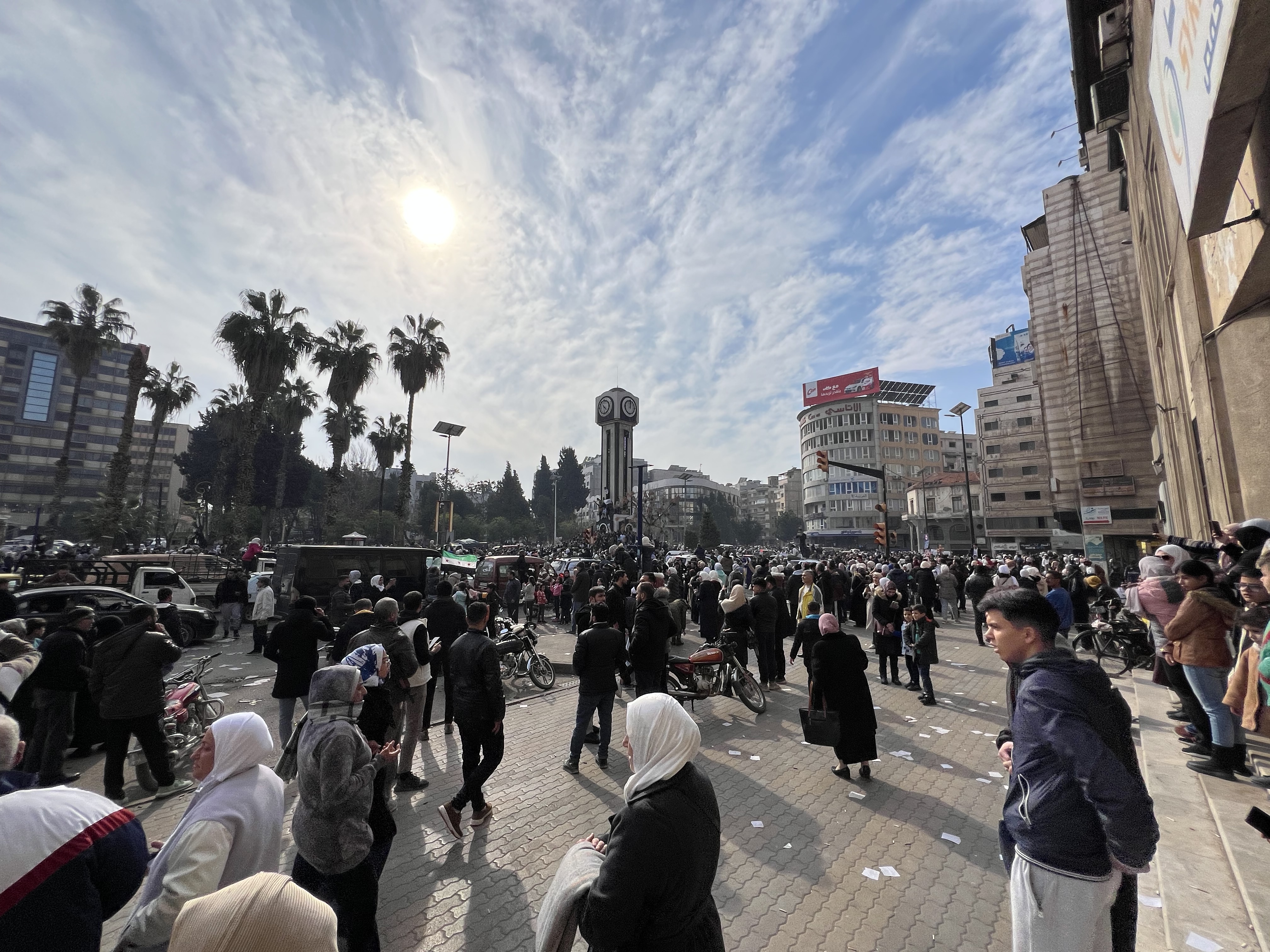
On 8 December 2024 in the early morning, people in the streets and a mosque in Damascus announced: “saqat bashar al-kalb” (Bashar, the dog has fallen). Since March 2011 Syrians have spilled blood and tears on the path towards hurriyyeh and karameh (freedom and dignity). Thirteen years later, their sacrifices have paid off. Finally, “Sourriyyah leina ow ma hi la beit Al-Assad” (Syrian is for us Syrians, not for the Assad family). Newscasters, analysts, diplomats, and academics have analysed what was happening through different prisms. However, what they have struggled to explain is how the will and determination of the Syrian people, who were victims of death, destruction, and displacement, remained unbreakable.
The strategy which the Assad regime, Russia, Iran and their affiliated militias followed in Syria as they worked to crush the 2011 popular uprising, was to bomb cities and force their residents to either surrender through settlement deals or leave their areas for the north and northwest of Syria. This was an approach to managing the Syrian conflict that the Assad regime and its backers followed. The geographical location played a role in making this strategy successful as most Assad opponents are far in the north and northwest of Syria.
Assad, his backers, and regional and international policymakers never understood that the Syrian revolution was a genuine revolution. They often interpreted it as a civil war or a rivalry among regional and global players. In the best-case scenario, they viewed it as a part of the Arab Spring which brought no-one but Islamists to power. Therefore, it has been deemed a failed movement. However, Syrians, including young boys who were evicted to the north and northwest had something else to say. While being evicted on green buses from Aleppo, Ghouta, Deraa, Homs, and other places that witnessed armed struggle during the revolution, many of them recorded videos saying that they will come back to their areas when they are old enough and expel the Assad regime and its allies. Some of them indeed fulfilled their promises on December 8 2024.
The media portrayed Hayat Tahrir Al-Sham as the victory-makers. Whilst this could be argued as true, we should not ignore the rest of the factions who were unified under the name Idaret Al-Amaliyyat Al-Askariyyah (Military Operations Management) to launch the operation which eventually ended up toppling the Asad regime in just eleven days. This unification was phenomenal. It is the sons of the Syrian Revolution who toppled Assad. They ended the regime founded by Hafez al-Assad, which had ruled for 54 years through repression, state authoritarianism, and state capitalism.
Both Assads, Hafez and Bashar assumed the role of General Secretary of the Ba’ath Socialist Party in Syria. The party controlled trade unions, student unions, and professional associations to bolster its legitimacy and dominate society. This control made the Ba’ath Party the undisputed leader of the state and society. However, when Bashar al-Asad took over, power shifted to the military, new cronies, and security personnel. As a result, the unions and other mass organisations lost significance, leaving the ruling elite without their traditional social support base. This change weakened the party’s societal control and led to a more fragmented political landscape.
Although the regime desperately tried to present itself as a socialist and anti-imperialist regime, in reality it used the masses including the workers, the farmers, the peasants, and trade unions to cement the rule of the Assad family. The downfall of the Assad regime and the flight of Bashar himself to Russia clearly shows that the regime had no social basis even among the president’s inner circle and sect. In other words, Syria, for over five decades, was governed by a state capitalist regime rather than a socialist, anti-imperialist regime as Assad supporters and international leftists would claim.
Whilst all media focus was on the military operations led by HTS and its allies coming from the north, Syrians in Al Sweida, Dera and Quneitra were either negotiating with military units in the South to withdraw or capturing these units after heavy clashes. Indeed, they were as close as 3 kilometres to Damascus. It is worth noting that revolutionary fighters agreed to a settlement with Russia and the Asad regime in both Deraa and Quneitra following the Russian aggression in late 2015 throughout 2016. In Al Sweida, despite this agreement, peaceful anti-Assad demonstrations continued for over a year until revolutionaries took up arms and began fighting the regime’s military and security forces following the successes of the military operations against Assad in northern Syria which began on 27 November.
As Syrians overturn 54 years of Assad’s tyranny, the challenges are massive. At the military level, Syrian Democratic Forces spearheaded by the Kurdish People’s and Women’s Protection Units (PYD and YPJ) are engaged in fierce fighting with the Turkish-backed Syrian National Army in several areas in northern Syria. The SDF expanded areas under its control by taking over areas in Aleppo on 5 December and Deir Ezzor on 6 December after the Assad regime’s forces withdrew. The SDF also killed a few Syrians celebrating the Assad regime’s collapse in Aleppo through their snipers who were stationed in Al-Ashrafiyyah and Sheikh Maqsood neighbourhoods. The Syrian National Army captured Tal Rifaat, Manbij and Tishreen Dam. The Military Operations Management coalition took over the majority of Deir Ezzor. Meanwhile, SDF (YPG) shot at demonstrators in Raqqa who wanted to celebrate the fall of Assad by flying the revolutionary flag despite the Autonomous Administration of North and East Syria (AANES)’s announcement of an agreement to fly the revolutionary flag.
Israeli forces seized more Syrian territory, expanding their control over the whole of the “buffer zone” near the Golan Heights including the strategically-placed peak of Jabal al-Sheikh (Mount Hermon) which overlooks Damascus. Their targeting dismantled Syrian Army units and ammunition stores has never stopped since the announcement of the downfall of the Assad regime.

Photograph: © Muhammad Hajjar
The Syrian economy is devastated. This could indeed be the obstacle to stop real change from taking place in Syria. Unlike Egypt following the January 2011 Revolution, the regime’s Syrian Arab Army has been dismantled at the human resources, chain of command, and ammunition levels. While this is a reason for hope in that Syria will not likely face a military coup, like Egypt, the elite class including NGO country directors and staff, businessmen, top employers in Syrian institutions of the Assad regime, and intellectuals, are likely to be the new ruling class in Syria. This would primarily mean that Syrians changed nothing but the places of the colours of their flag with three red stars instead of two green ones.
Syrian revolutionaries and activists have been divided since the fall of Assad. These divisions have continued to grow, according to information I have gathered for this article based on nearly 30 formal and informal interviews and analysis of dozens of social media accounts and news stories
Some want to build the state based on what Syria was left by the old regime, including institutions, staff and managers who do not have blood on their hands or participate in cracking down on the revolution. Others, however, want a real change, by holding those who are criminals accountable immediately and stop the feloul (remnants) of the Assad regime from occupying high positions in new Syria, fearing the repetition of the Egyptian counter-revolutionary scenario, which was led by the army.
Nader, an activist from Aleppo, argued that we should give the current caretaker government a chance.
“They deserve a chance to do what they stated in terms of providing services and move into the next stage, which we still do not know how it will take shape. Let’s wait and see.”
It is worth mentioning that a caretaker government has been established taking over from the ministries of the Assad regime, whose prime minister posted a video aftermath of the fall of Assad stating that he never fled and was ready to hand over the authorities and powers to the opposition. Other activists and revolutionaries warned of the comeback of the feloul (remnants) of the Asad regime and that they would be held accountable for the crimes they committed.
Aminah, a Syrian Palestinian activist from Damascus told me:
“We do not want to see the pro-regime personnel faces again on TV or in higher positions in the new government, they should be sidelined and if this does not happen now, it will not happen anywhere shortly”.
In response to those who believed that the Syrian regime supported Palestine and the Palestinian cause, Aminah explained:
“Both Assads were smart in playing the card of ‘standing with Palestine’. I have no idea how people were convinced by what both Assads said despite their failure to take concrete action. The Assad regime, in practice, protected Israel. The Syrian army never fired a bullet against Israel since 1974. The same regime established the notorious security Far’a Falastin (the Palestine Branch also known as Branch 235), which arrested, tortured and killed hundreds of Syrians and Palestinians.”
Additionally, both Assads backed and sponsored the creation of Palestinian armed militants, including The Popular Front for the Liberation of Palestine – General Command, which did nothing for Palestine. On the contrary, Aminah told me how “the regime used these militants to suppress both Syrian and Palestinian revolutionaries and activists.” The new administration decided to dissolve these militants and asked their members to hand their weapons to the new administration, which emphasized that only the state would have arms. This applies to all armed factions in Syria including the revolutionary factions that participated in the overthrow of the Assad regime.
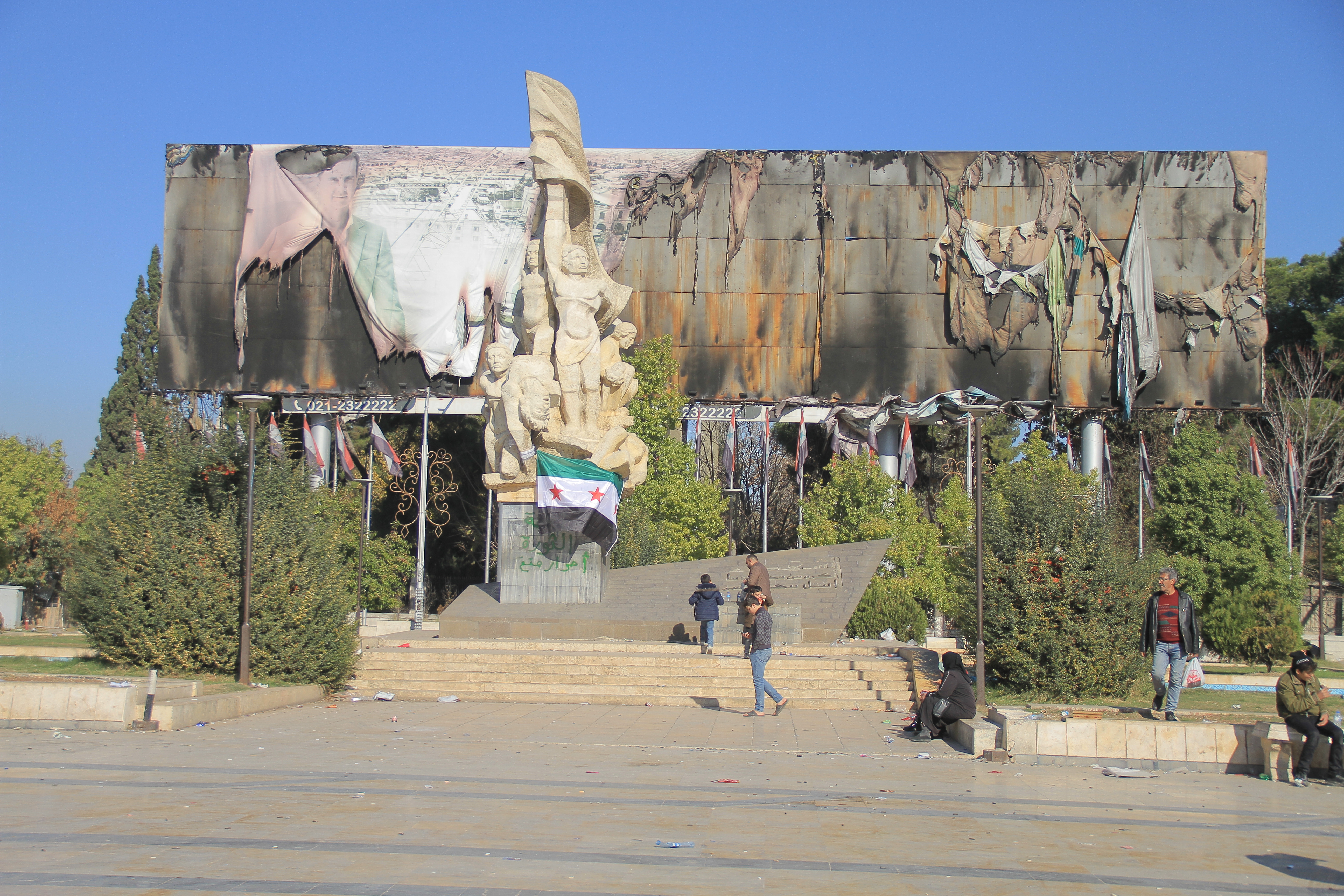
As Syrians come to terms with the horrendous crimes of the Assad regime, Human rights activists and lawyers have warned that revenge and extrajudicial killing should not be allowed. Their stand is that we are looking forward to a new Syria for all Syrians. Lawyers have sent several messages to the new administration urging protection for mass graves and documents that might include crucial information about potential perpetrators and criminals who were in charge of committing crimes in both prisons and security intelligence branches. Although the road to achieving justice is long, these pieces of evidence are crucial for future trials.
The revolution in Syria, driven by the spirit of the working class and the unyielding determination of the oppressed, nevertheless has the potential to bring about significant change. But to ensure this uprising leads to a truly equitable and just society, we must heed the lessons of past revolutions in Egypt, Tunisia, and Portugal—each a testament to the power of the people but also a warning of the challenges we must avoid.
In Egypt, the 2011 revolution started with high hopes for democracy and freedom, a triumph for the workers, and the common people. However, the transition was plagued by political instability, infighting, and a lack of united leadership. The military eventually seized control again, showing us the dire need for a strong, united civilian government. In Syria, we must establish a broad coalition that includes all segments of society—workers, farmers, and the disenfranchised—ensuring that power is not hoarded by a select few or the elite. Truly inclusive political participation and a clear plan for democratic governance are crucial to avoid a return to dictatorship. The democratic reforms resulting from Tunisia’s revolution, though hailed as a success by some, have been reversed by a new authoritarian regime led by Kais Saied. High unemployment and economic disparity sapped the revolutionary spirit.
For Syria, the fight is not just for political change but also for economic justice. Despite the destruction and the massive challenges, we need policies that create jobs, promote fair development, and ensure social welfare. The root causes of discontent must be addressed to build a stable and prosperous future where every Syrian is included.
Portugal’s Carnation Revolution of 1974 offers insights into the perils of rapid change. The aftermath saw economic turmoil and political polarisation, highlighting the need for a steady and well-managed transition. Syria’s path should be gradual yet decisive, balancing urgent needs with stability, continuity, social and criminal justice, and accountability. Communicating effectively with the masses and involving them in the process is essential to maintain support and manage expectations.
Furthermore, safeguarding human rights and fostering social cohesion is vital. In the chaos that follows conflict, there is a risk of revenge and societal fragmentation. Syria must prioritise reconciliation and build a legal framework that protects the rights of all its people, regardless of their backgrounds. Trust-building among communities and promoting tolerance will be essential for a unified Syria.
The new administration in Syria has already taken promising steps that align with these revolutionary principles. They have opened “settlement centres” across the governorates for former regime officers and army recruits, providing them with temporary IDs to shield them from retribution. This move aims to prevent a cycle of revenge and create a foundation for peace. Additionally, they have safeguarded minority rights, ensured that military personnel leave the cities, and entrusted the police with maintaining order, setting the stage for a more secure and stable future.
The success of Syria’s revolution depends on learning from Egypt, Tunisia, and Portugal, avoiding their pitfalls of political instability, economic stagnation, and social division. Adopting a comprehensive approach that addresses political and socio-economic dimensions will ensure the revolution brings meaningful and lasting change for all Syrians.
There is no doubt that Syrians are divided and cautiously optimistic. With the new administration taking over the trade unions and other state institutions, let us not forget that this is just a transitional period. The big fear is that a ‘revolutionary’ elite associated with the new administration will take over from the regime’s elite, leaving those whose struggles fuelled the revolution, including the working class, without real representation. The new administration in Syria announced that the current caretaker government will remain in place until March 2025, although preparing a new constitution could take up to 3 years and elections up to four. However, the question remains, how will Syrians from all backgrounds be represented in new Syria?
Abdusalam Dallal has a PhD in politics and is a Syrian researcher and analyst


 MENA Solidarity Network